
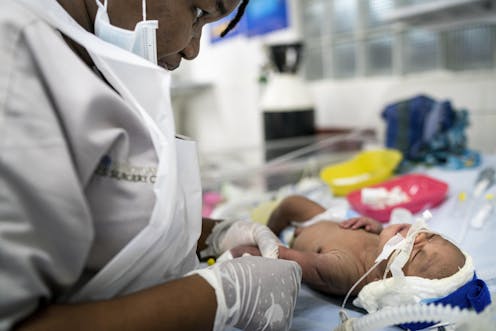
Globally, about one baby in 10 is born too soon – that’s around one baby every two seconds. A full term pregnancy is around nine months or 37 weeks. Babies born before this mark are considered premature. Preterm birth is a significant global health issue. It can cause serious short term consequences, such as respiratory and cardiac problems. In the long term, babies born prematurely may face motor, neurosensory, cognitive and behavioural deficits.
A decade ago in 2012, a global coalition of stakeholders launched Born Too Soon: The Global Action Report on Preterm Birth. The report made a case for global action to mitigate the problems of preterm birth.
Since then, many countries have adopted plans and resolutions on newborn health. Global guidelines now include life-saving interventions, such as the use of antenatal corticosteroids and kangaroo mother care (skin-to-skin contact). There’s also been growth in community activism on preterm birth and stillbirth prevention, driven by networks of parents, health professionals, academia and civil society.
Despite these interventions, the last decade has seen no measurable change in global preterm birth rates in any region of the world. For example, in southern Asia 13.3% of babies in 2010 were born premature; this figure was 13.2% in 2020. In sub-Saharan Africa 10.1% of babies in both 2010 and 2020 were premature. A group of over 140 individuals from more than 70 organisations contributed to a new report, Born Too Soon: decade of action on preterm birth, to coincide with the 10th anniversary of the first report.
The latest report shows that the overall progress in improving the wellbeing of babies born prematurely, and that of their families, has not gone fast enough or far enough. Where babies are born often dictates whether they will survive. Inequalities related to race, ethnicity, socioeconomic and educational status, and access to quality healthcare services determine the likelihood of death and disability. For example, one in 10 extremely preterm babies (born before 28 weeks or seven months) survive in low-income countries. In high-income countries more than nine in 10 of these babies survive.
Strategies to reduce preterm birth include: pre-conception care such as access to family planning; sexual health programmes aimed at prevention and treatment of infections prior to and during pregnancy; and assessment and treatment of low nutritional status before conception.
The report is a wake-up call. The problem of preterm birth needs concerted efforts from governments and donors. Families, communities, healthcare providers and the civil society must also be actively involved in the solutions.
Key findings
In addition to established global issues, the report highlights new and intensified challenges which have affected efforts to improve preterm birth outcomes. We call these the “four Cs”:
Conflict: By the end of 2022, over 100 million people were driven from their homes by war, violence or human rights abuses, particularly in countries such as Ukraine, Afghanistan, Sudan and Mozambique. Worldwide, 61% of maternal deaths, 51% of stillbirths and 50% of newborn deaths occurred in countries that required UN humanitarian aid in 2023. Surviving newborns from conflict zones are particularly vulnerable to lifelong risks as a result of poor healthcare services.
COVID-19: The pandemic destabilised health services for women and newborns. Separation of newborns from caregivers threatened high-impact practices like kangaroo mother care and exclusive breastfeeding (giving no other food or drink – not even water – except breast milk). A recent study found that if universal coverage of kangaroo mother care were achieved, more than 125,000 newborn lives around the world could have been saved. The number of newborn deaths from COVID-19 could have been lower than 2,000.
Climate change: Climate change (including extreme heat) and natural disasters are displacing millions of people. The health impacts are wide-ranging. In 2020, 20% of newborn deaths were attributed to air pollution, mostly because of preterm birth. Toxic chemicals in maternal blood results in immune system stress and placental dysfunction.
Cost of living crisis: Disruptions to supply chains caused by the COVID-19 pandemic and the climate crisis have dramatically increased the cost of living. Global inflation rose from 4.7% in 2021 to 8.8% in 2022, creating a global cost of living health crisis. There are reports of babies dying in low- and middle-income countries following discharge to families who cannot afford heating and oxygen at home, further compromising maternal and newborn health outcomes.
Recommendations
The new report sets an ambitious agenda to reduce the burden of preterm birth by addressing contributory factors both within and outside the health system. Its recommendations have crucial contextual relevance to Africa, where preterm birth is the leading cause of deaths in babies under a month old.
In summary, the report recommends:
1. Counting and accounting for preterm births
Data availability and quality must improve. This can be done by counting every baby everywhere, including those stillborn, and accurately recording gestational age and birth weight.
2. Rights and respect
Women and their families should be empowered and cared for with respect. This will take more healthcare providers and stronger accountability.
3. Women’s and maternal health services
Women’s access to high-quality, respectful sexual, reproductive and maternal health services is fundamental. All women and adolescent girls should be able to determine the number and spacing of their children.
4. Care for small and sick newborns
Most of the major causes of neonatal death can be prevented by caring for the small or sick newborn. This requires commitment, resources and joined-up systems.
5. Intersectoral action
There is a need to invest in policies that prioritise equitable and inclusive education, including sexuality education, and innovative financing schemes that support families with preterm babies. Countries also need emergency response plans to avoid service interruptions in times of crisis.

The authors do not work for, consult, own shares in or receive funding from any company or organisation that would benefit from this article, and have disclosed no relevant affiliations beyond their academic appointment.
: The Conversation – Articles (AFRICA)
Have you tried: Diving with Sharks?