
Empathy can be taught at school – and it can lead to more creative thinking:

Most people think that empathy – the ability to put yourself in another person’s shoes – is fixed, but it’s not. Empathy can be taught. Research has shown that reading can help children develop empathy. Through reading, children can experience the situations of others that are very different to their own, and reflect on that experience.
Further findings on the effect of teaching empathy in schools come from a programme I work with called Empathy Week. It shows pupils documentary films with a range of scenarios from different cultures, designed to inspire empathy. Early findings (which have not yet been peer-reviewed by other scientists) suggest that as little as one week of empathy lessons using these films improves pupils’ emotional awareness.
What’s more, in my research with schools I have found that learning that incorporates empathy can also help students increase their creativity.
Levels of empathy
We have empathy to a larger or lesser extent depending on a variety of factors, including personality traits, our genes and our environment. Research has shown that some, but not much, of our empathy is genetic – about 10%. This suggests that there is potentially a large amount of empathy that can be acquired from our everyday interactions.
However, we can lose empathy as we grow older. Research with children aged between five and nine measured their degree of empathy as they viewed scenarios depicting social injustices towards children of different races.
Their brain activity was measured using an EEG (electroencephalogram), which looked for higher levels of “mu suppression” – a brain frequency that is used as an indicator of empathy levels.
The children did not show racial bias in their empathy responses – but previous studies with adults have found that adults do have this bias in their empathy responses. This suggests that people have the potential to develop biases that can reduce empathy.
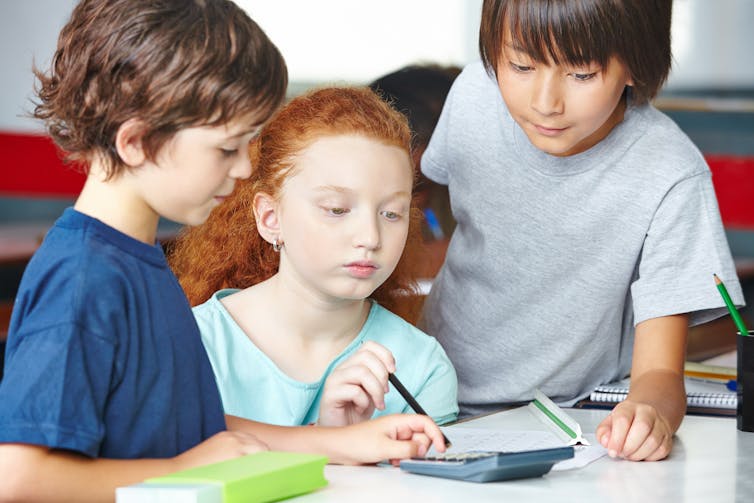
Empathy helps us understand what others are thinking and feeling. It helps children build relationships, engage with what they are learning about, and work and play together.
Promoting creativity
My research has investigated the effect of teaching empathy on the social and emotional skills of creativity in design and technology classes in the UK.
Pupils in year nine – aged 13 to 14 years – from two schools were assessed for their creativity levels both at the start and at the end of the academic school year. We did this using the Torrance Test of Creative Thinking – which measures drawn and written responses to drawn and written prompts.
After the students first took the test, one school carried on as normal with its usual design and technology lessons. At the other school, the usual lessons were replaced with a series of lessons that focused on empathy, called Designing our Tomorrow.
The students were asked to create a product for children with asthma and their families: a pack that contained the information and equipment needed to treat asthma in young children. They were prompted to be empathetic – for instance, by not being judgmental of their own designs and those of others. The students were encouraged to empathise with the people they were designing the product for.
Results showed that only the school where we ran the lessons focused on empathy increased its levels of creative responses. These findings suggest that creativity can be taught – particularly with instructions that advocate the importance of empathising with the subject matter.
Teaching empathy at school would help young people retain it in their repertoire of social skills, enhancing their learning and equipping them for the adult world.

Helen Demetriou does not work for, consult, own shares in or receive funding from any company or organisation that would benefit from this article, and has disclosed no relevant affiliations beyond their academic appointment.
: The Conversation – Articles (UK)
Have you tried: Farking?