
Ebola in the DRC: how a global and local response has been mobilised:
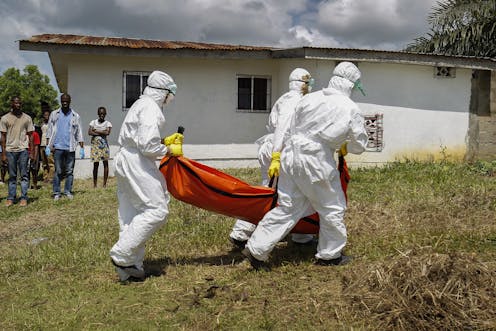
The number of confirmed cases of Ebola in the Democratic Republic of Congo (DRC) has increased but health authorities are confident that the outbreak can be contained. At least 17 people have died, according to the country’s health ministry. Nevashan Govender from the National Institute for Communicable Diseases spoke to Health and Medicine Editor Candice Bailey about what’s needed to contain the outbreak.
What steps must the DRC take to ensure that the outbreak is brought under control?
The World Health Organisation has set up an incident management system where staff and resources are dedicated to coordinate a response to the outbreak. It is important that this structured and coordinated by competent skilled professionals.
It will also deploy epidemiologists, logisticians, clinicians, infection prevention and control experts, risk communications experts and vaccination support teams.
This team will help the country’s government understand the extent of transmission and ensure that infected people are cared for. Importantly it will trace anybody who was in contact with those who have been infected so that it can contain the outbreak.
The team will also engage with communities to explain the risk of the virus and the necessary precautions that need to be followed to reduce the chances of it spreading.
In addition, it will help the DRC’s health authorities work out what resources are needed, and then help fill the gaps.
During the outbreak in May 2017, several organisations partnered with local authorities in the DRC to rapidly scale up its operations. This helped curb the outbreak. Just as they have done on previous occasions, Médecins Sans Frontières (Doctors without Borders) has deployed a team to assist with operations.
How is this outbreak different to previous ones in the country and on the continent?
According to the WHO this is the ninth Ebola outbreak in the DRC over the past 40 years. Prior to this outbreak the most recent epidemic in the DRC was in May 2017. The outbreak took place in the Likati health zone in the province of Bas-Uele in the north-eastern area of the country.
The current epidemic is in the Bikoro health zone in the Equateur province which is in western part of the country on the border with the Republic of Congo.
This is the fourth time that an Ebola outbreak has been reported in the province but the first time in the Bikoro health zone.
What makes this particular outbreak different to others on the continent is that there has been a rapid, well coordinated and well-resourced response since the first case was diagnosed. The 2014 outbreak highlighted the need for a better response. The DRC has also learnt lessons from subsequent outbreaks.
The authorities in the DRC are now experienced in responding to an Ebola outbreak. In addition, global health partners have stockpiled vaccines, built research and monitoring capacity, and have rapid response teams ready for deployment.
What challenges does the country face with handling Ebola outbreaks?
The DRC has limited resources with multiple challenges because of ongoing conflict in the country over many years.
The area currently affected by Ebola has huge challenges. The province of Equateur has an estimated population of 2.5 million people with only 284 registered health facilities. The Bikoro health zone has a population of around 163 000 people with only three hospitals and 19 health centres. The facilities mostly have only limited functionality.
Medical supplies are provided by international health partners, but stock-outs are frequent. Stock-outs are a problem because when there’s an Ebola outbreak people need early supportive care such as rehydration.
Should other countries in the region be launching outbreak emergency programmes?
No. It hasn’t reached those levels yet. If it met the criteria of a public heath event of international concern as defined by international health regulations, emergency responses would need to be launched.
The WHO risk assessment has suggested that there is a moderate risk to the region. This is mainly due to the proximity of the affected area to the Congo River which links the capitals of the Republic of the Congo and the Central African Republic.
Heightened surveillance and awareness in the region will continue and the WHO will coordinate communication with the neighbouring countries and the broader international community so that they are ready to contain the outbreak if the situation changes.

Nevashan Govender does not work for, consult, own shares in or receive funding from any company or organisation that would benefit from this article, and has disclosed no relevant affiliations beyond their academic appointment.
: The Conversation – Articles (AFRICA)
Have you tried: Visiting Port Elizabeth?