
Doctors only started measuring body temperature 200 years ago – here’s why:
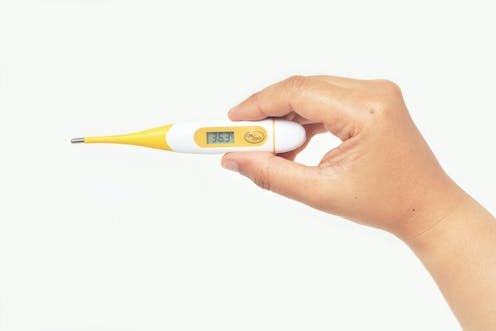
Over the past year, fever thermometers have become omnipresent. Body temperature is taken in front of shops, at airports, even before visiting a museum – often with ultra-modern devices. So-called fever cameras or fever scanners can determine the body temperature even without contact. It might now seem obvious that fevers are connected to a high body temperature – in many cultures, the question “do you have a temperature?” is clear evidence of that – but this hasn’t always been the case.

The beginnings of measuring fever go back more than 400 years. At the turn of the 17th century, several scholars dealt with the development of thermometers. In London, Robert Fludd worked on an instrument to measure temperature. On the Italian peninsula, Galileo Galilei and his close friend Giovanni Francesco Sagredo were engaged in the same activity. So it cannot be clearly determined who invented the thermometer.
But historians agree that a particular member of Galileo’s Venetian circle of friends was the first to apply the instrument to medicine. This was the Venetian physician Sanctorio Sanctorius (1561 – 1636), who developed the first fever thermometers to determine his patients’ body heat.
This was a novelty. While today we trust in numbers and measurements, especially regarding medical issues, in Sanctorius’ times it was not thought that phenomena like health or disease could be recorded by numbers, let alone be measured. Rather, people relied on the experience of their physicians. Through regularly touching the foreheads of their patients, they gauged what kind and how bad the fever was.
The first body thermometer
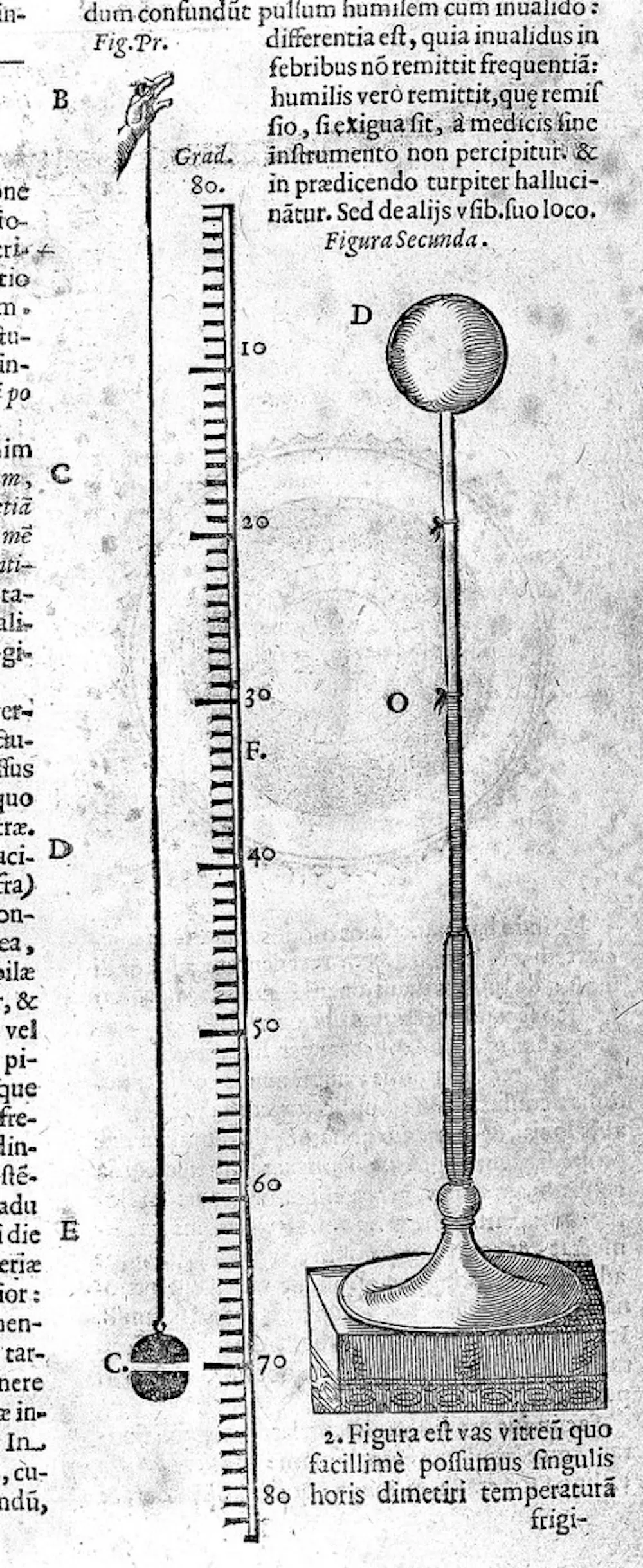
Sanctorius’ measurement and notion of fever did not tally with modern understandings. The Venetian physician made use of the thermal expansion of air in his thermometers, rather than liquids, which is what tends to be used in today’s traditional fever thermometers.
Since air does not expand and contract only due to changes in temperature, but also in atmospheric pressure, Sanctorius’ unsealed thermometers were sensitive to both. Therefore, any measurement of body heat with an instrument of Sanctorius’ type would be distorted by the influence of atmospheric pressure. This was realised a short time later. To avoid its influence, in later thermometers, air was replaced with a liquid sealed in a glass tube.
Sanctorius seems to have used his non-sealed air thermometers anyway. Galileo and Sagredo, who worked with similar types of thermometers outside of a medical context, realised that there were irregularities, but the phenomenon of atmospheric pressure and its effect was still unknown to them. From today’s perspective, such thermometers might seem not very helpful, but at the time these were the first instruments that could be used to obtain information about degrees of hot and cold without appealing to the human senses.
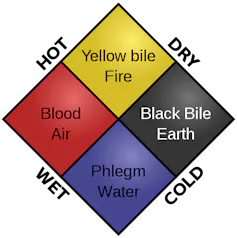
And although Sanctorius used the Latin term temperamentum, his concept of a “temperature” was very different from today’s. He adhered to the medical theory of the four humours, which assumed that human health depended on a balanced proportion of the four humours: blood, phlegm, yellow, and black bile. These humours were assigned to so-called primary qualities: hot, cold, moist and dry. Here, too, balance was crucial: if one of the primary qualities was too strong or too weak, it could cause diseases.
So when Sanctorius used his fever thermometers, what he was trying to measure was certain degrees of hot and cold in his patients’ complexions, which he believed would reveal their individual mixtures of the four humours. In doing so, he wanted to determine “the quantity of diseases”, by which he meant the deviation of the body from its balanced, healthy state.
For a long time, the “quantity” of heat was considered to be only one of several parameters that allowed the physician to differentiate between healthy body heat and febrile heat. The latter was also characterised by qualitative aspects and could, for example, be “sharp” or “biting”. Not only the degree of heat was important but also its kind. What’s more, besides body heat, the pulse, respiration, the skin, and urine were all thought to indicate a fever’s character.
Thermometers in use
And so although the diagnosis and treatment of fever was a central preoccupation of the physicians of the Renaissance, Sanctorius’ thermometers did not find considerable application in daily medical practice because heightened temperature simply wasn’t considered the main determinant of a fever. To physicians at the time, the measurement of body heat was of secondary interest.
It was only in the 19th century that the fever thermometer came into general clinical use and found its way into the household. Today, fever is defined as elevated body temperature and seen as a symptom that can occur in different diseases.
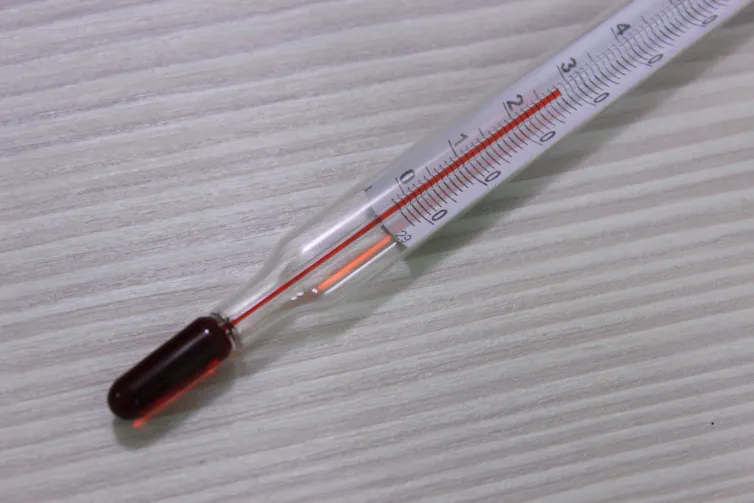
As different as Sanctorius’ thermometers and his notions of fever are to our modern devices and our understanding of increased body temperature, they still give an important insight into the long path that preceded our modern fever measuring devices – devices that are icons of the current pandemic like hardly any others.

Teresa Hollerbach does not work for, consult, own shares in or receive funding from any company or organisation that would benefit from this article, and has disclosed no relevant affiliations beyond their academic appointment.
: The Conversation – Articles (UK)
Have you tried: Farking?