
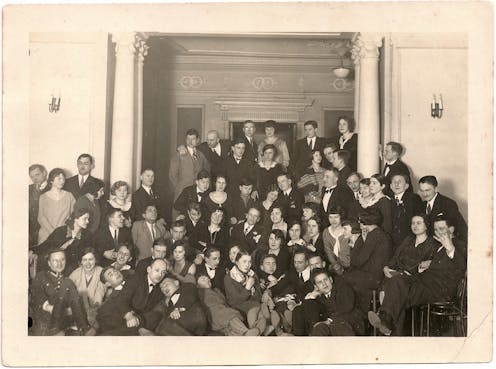
In 1931, when the Polish poet Czes?aw Mi?osz was 20 years old, he spent a summer travelling across Europe with friends. At the French border, as he later wrote in Native Realm, they saw a sign that “Prohibited Gypsies, Poles, Rumanians and Bulgarians from entering the country”.
This experience was a vivid reminder that travellers from eastern and central Europe were often unwelcome in the western part of the continent.
Fifty years later, in his Nobel lecture, Mi?osz pointed out that it was still difficult to speak of a single Europe. There were in fact “two Europes”: western Europe and what he referred to as “the Other Europe”.
The perceived “otherness” of eastern and central Europe is a complex phenomenon, which Mi?osz continued to examine in his writings until his death in 2004. As the literature scholar Eva Hoffman notes in her new book, On Czeslaw Milosz: Visions from the Other Europe (Princeton University Press), his oeuvre is, to a large extent, an exploration of this region that shaped him as a person and a poet.
As Hoffman observes, however, this same region was “imagined as inferior, obscure and altogether insignificant by the inhabitants of what was considered Europe tout court: Europe, which stood for civilization itself.”
The Other Europe that Mi?osz wrote about was deeply marked by the excesses of Hitler’s and Stalin’s totalitarian regimes. Mi?osz witnessed much of this violence first-hand.
He spent the second world war in Poland under Nazi and then Soviet occupation. In 1951, he defected from the Soviet-controlled Polish People’s Republic and became an exile in France.
His writings from the period are an attempt to make sense of the increasing appeal of political ideologies such as fascism and communism, at a time when religion, as my research shows, had ceased to offer a shared frame of reference.
The othering of eastern and central Europe
Mi?osz’s 1953 book, The Captive Mind, provides an incisive critique of Soviet communism. Mi?osz was ostracised not only in Poland as a traitor to the New Order, but also in France by intellectuals including Jean-Paul Sartre.
In his youth, Mi?osz had sympathised with communist ideals. In France, however, he found himself in the unenviable position of an eastern European exile whose experiential knowledge of an oppressive political regime was rejected because it challenged left-wing intellectuals’ uncritical admiration for the Soviet project.
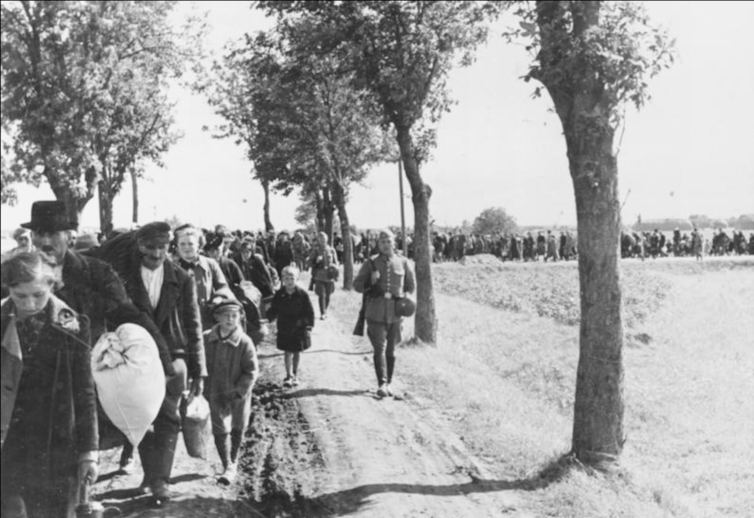
Hoffman, who herself became an exile from Poland in 1959, recounts the not dissimilar experience of being treated with “patronizing scorn” as a graduate student at Harvard in the 1960s because she dared to challenge what she describes as her fellow students’ “naïve idealization of ‘the workers’”.
Her peers, she writes, perceived Soviet communism to be “a radically progressive philosophy” rather than what she knew it actually to be, “an exceptionally repressive, reactionary ideology and form of governance”.
As both Mi?osz and Hoffman point out, to be framed as the “other” is to occupy a position of marginality. This is a shared experience of many exiles. Hoffman uses the term “immigrant rage” to describe the feelings that she experienced when she was ignored, misunderstood and marginalised.
Mi?osz and Hoffman rejected dominant western narratives of eastern and central Europe, whether they came from the left or the right. This chimes with the long-standing resistance among eastern and central European writers to what political analyst Edward Lucas has called the “westsplaining” of the region.
The perception of eastern and central Europe as a place of essential otherness continues to shape the experiences of migrants from the region today. The discrimination they face, however, often remains invisible.
While eastern Europeans’ whiteness places them in a position of privilege, it is, as sociologist Kasia Narkowicz has said, “peripheral whiteness”. Research shows that eastern Europeans are often racialised and perceived through the lens of their linguistic otherness.
What’s more, sociologist Aleksandra Lewicki points out that this racialisation reflects and contributes to the marginalisation of the region in both political and economic terms.
All this has serious political implications. The racialised vilification of eastern Europeans played a central role in the unofficial Leave.EU Brexit campaign. It continues to shape eastern European migrants’ post-Brexit experiences.
More recently, the perceived otherness of eastern Europe has set the tone for the public debates that followed the Russian invasion of Ukraine. Some antiwar campaigns have presented the war as a clash between, as Stop the War has put it, “Russian and US imperialism”, rather than an entirely unprovoked aggression against a sovereign state. (Stop the War’s motion was endorsed by the UK’s largest union of university staff, the University and College Union).
The discourse that such campaigns have employed frames Ukraine as a place of essential otherness. It denies Ukrainian people both a voice and a right to self-determination.
As political economist Yuliya Yurchenko aptly points out, westsplaining of the conflict has resulted in calls for what she terms a “phoney peace”. By this, she refers to peace as “confused and conflated with faux international stability – peace for some nations at the expense of localised wars for others”.
In practice, Yurchenko states, this amounts to condoning the mass murder of Ukrainians.
Having witnessed crimes against human rights, Mi?osz argued that poets who hailed from the Other Europe were in a unique position to be “bearer[s] of memory”. In his Nobel lecture, he mentioned two of his contemporaries, the poets W?adys?aw Seby?a and Lech Piwowar, who were murdered by the Soviet secret police in the Katy? Massacre of 1940.
Their deaths were obfuscated by a conspiracy of silence for almost half a century. The Russian government would only acknowledge Soviet responsibility for the crime in the 1990s.
Today, Ukrainian poets and writers bear witness to the suffering of the victims of the Russian aggression in occupied Ukraine. Their testimonial voices – such as that of the author Victoria Amelina, who was killed in a Russian missile strike in July 2023 – offer an important counterpoint to the public debates that continue to take for granted the otherness of eastern Europe.
Listening to them would be an important step in mending the rift between “two Europes” that Mi?osz’s writings confront us with.

Joanna Rzepa does not work for, consult, own shares in or receive funding from any company or organisation that would benefit from this article, and has disclosed no relevant affiliations beyond their academic appointment.
: The Conversation – Articles (UK)
Have you tried: Diving with Sharks?