
Curious Kids: what do plants do all day?:
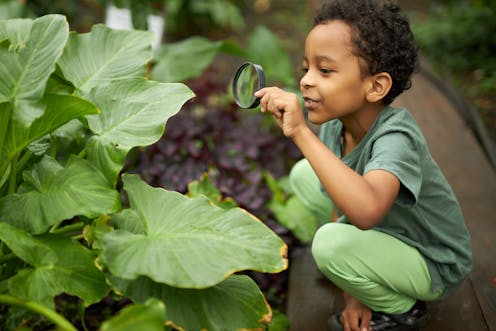
What do plants do all day? – Oliver, aged almost three, Kent, England
It is easy to think that the daily life of a plant is a simple one. They seem to just stand there and sunbathe. However, plants are very busy all the time doing many things. This activity is aimed at surviving the day and planning for the future.
Plants need food to survive. Being rooted in the ground means that they can’t move around to find food, so they must make their own.
They do this by taking water from the soil in through their roots and a molecule in the air, carbon dioxide, into their leaves. They then use the energy from sunlight which they absorb into their leaves to combine the water and carbon dioxide to make complex sugar molecules – food.
This process, called photosynthesis, is one of the most amazing chemical reactions on the planet.

Curious Kids is a series by The Conversation that gives children the chance to have their questions about the world answered by experts. If you have a question you’d like an expert to answer, send it to curiouskids@theconversation.com and make sure you include the asker’s first name, age and town or city. We won’t be able to answer every question, but we’ll do our very best.
The plant then does one of two things with these sugar molecules. It can use them in respiration. This is a process that releases the energy of the sugar molecules to allow the plant to do its daily activities. It can also convert the sugar molecules into other more complex chemicals to build other plant parts, such as new leaves or flowers.
However, the chemicals that are used to make up plant parts need more than just the input of sunlight, water and carbon dioxide. They also need additional chemicals that they take from the soil. It is the same as humans needing a healthy diet.
So, the plant spends all day mining the soil for useful chemicals such as nitrates, phosphates and various metals. These must then be moved to the part of the plant where they are needed.
Measuring light
Every day, plants must measure the amount of daylight they are getting. In particular, it needs to know whether the hours of daylight are getting less or more from one day to the next. Measuring this change allows the plant to recognise what time of year it is. If daylight is increasing, then it knows that it is spring and time to start producing flowers.

If daylight is getting less then the plant knows that winter is coming. It can put food into storage ready for next spring’s growth. For example, daffodils produce bulbs, and the potato plant makes tubers – which are the potatoes that we eat.
It can also get rid of things it will not need in the winter. Oak trees do not use leaves to make food during the winter, as there isn’t enough light. So, the leaves fall off its branches and grow again in spring.
While a plant is always keeping track of how much of the 24-hour period is daylight, a term scientists call light quantity, it also monitors any changes in light quality.
This is the type of light falling on the plant. It might be full sunlight, or it might be light that is filtered through the leaves of other plants. If the plant is not getting the right light quality, it means it is being shaded by other plants. It must either start growing taller to find the full sun again, or produce larger leaves to gather in more light.
Staying healthy
The plant also monitors its own health. If a plant is being eaten by insects, it can produce a set of chemicals to make its leaves less tasty.
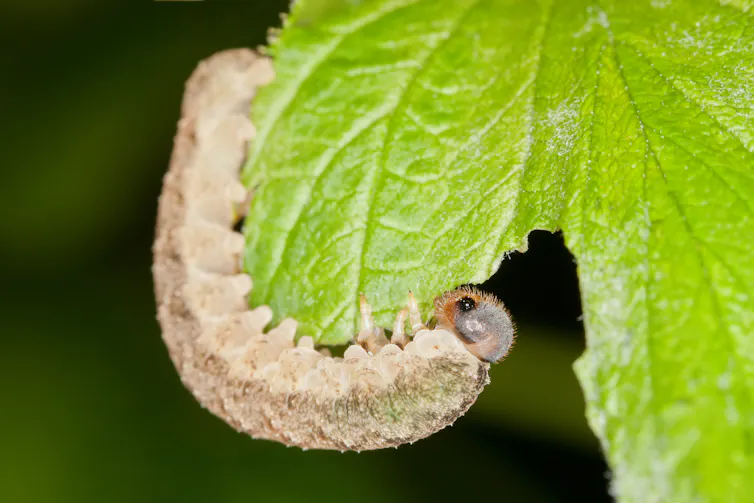
We also know that plants that have detected they are being eaten can release chemicals into the air to warn its neighbours, and let them know that they should start making their leaves less tasty.
The same applies if fungal disease strikes the plant. The plant produces chemicals to attack the fungus and seals off parts of the plant that are damaged too much to be repaired.
So, every day, plants are making food, extracting minerals so they can grow, working out what season it is and whether it is getting enough light, and protecting themselves from animals that want to eat them – as well as warning their neighbours. It makes for a busy day, although one that is largely invisible to humans.

Paul Ashton does not work for, consult, own shares in or receive funding from any company or organisation that would benefit from this article, and has disclosed no relevant affiliations beyond their academic appointment.
: The Conversation – Articles (UK)
Have you tried: Farking?