
Cumbrian coal: the 18th-century poem that perfectly encapsulated Whitehaven’s mining culture:
The debates waged over the opening of the Woodhouse Colliery in Whitehaven, Cumbria, have laid bare starkly different views about the steps the UK should take to honour its net zero commitments.
On December 7, Communities Secretary Michael Gove issued a letter approving the colliery’s creation, but his statement might not be the last word on the matter. The colliery’s opponents seem poised to launch a legal challenge.
This crossroads presents the opportunity to reflect on the role coal has played in Whitehaven’s development.
Several sources shed light on how mining fuelled the town’s growth. Among the most surprising, though, is an 18th-century poem.
A Descriptive Poem: Addressed To Two Ladies, At Their Return From Viewing The Mines Near Whitehaven, written by the Reverend John Dalton in the mid-1750s, is an extraordinary work. It not only describes a tour of one of Whitehaven’s mines but also celebrates the ingenuity and industriousness of the town’s people.
A brief history of mining in west Cumbria
It’s often thought that coal mining got started during the Industrial Revolution, but that’s not the case. People relied on coal long before the steam engine. The monks of St Bees Priory granted permission for coal to be dug around Whitehaven as early as the 13th century.
The intensive extraction of coal in west Cumbria got started some 400 years later, after the area around Whitehaven was acquired by the Lowther family. The family’s investments guided Whitehaven’s growth and the local coal industry began to boom.
In 1660, Whitehaven was little more than a fishing village. A century later, it was regarded as one of the nation’s most important towns.
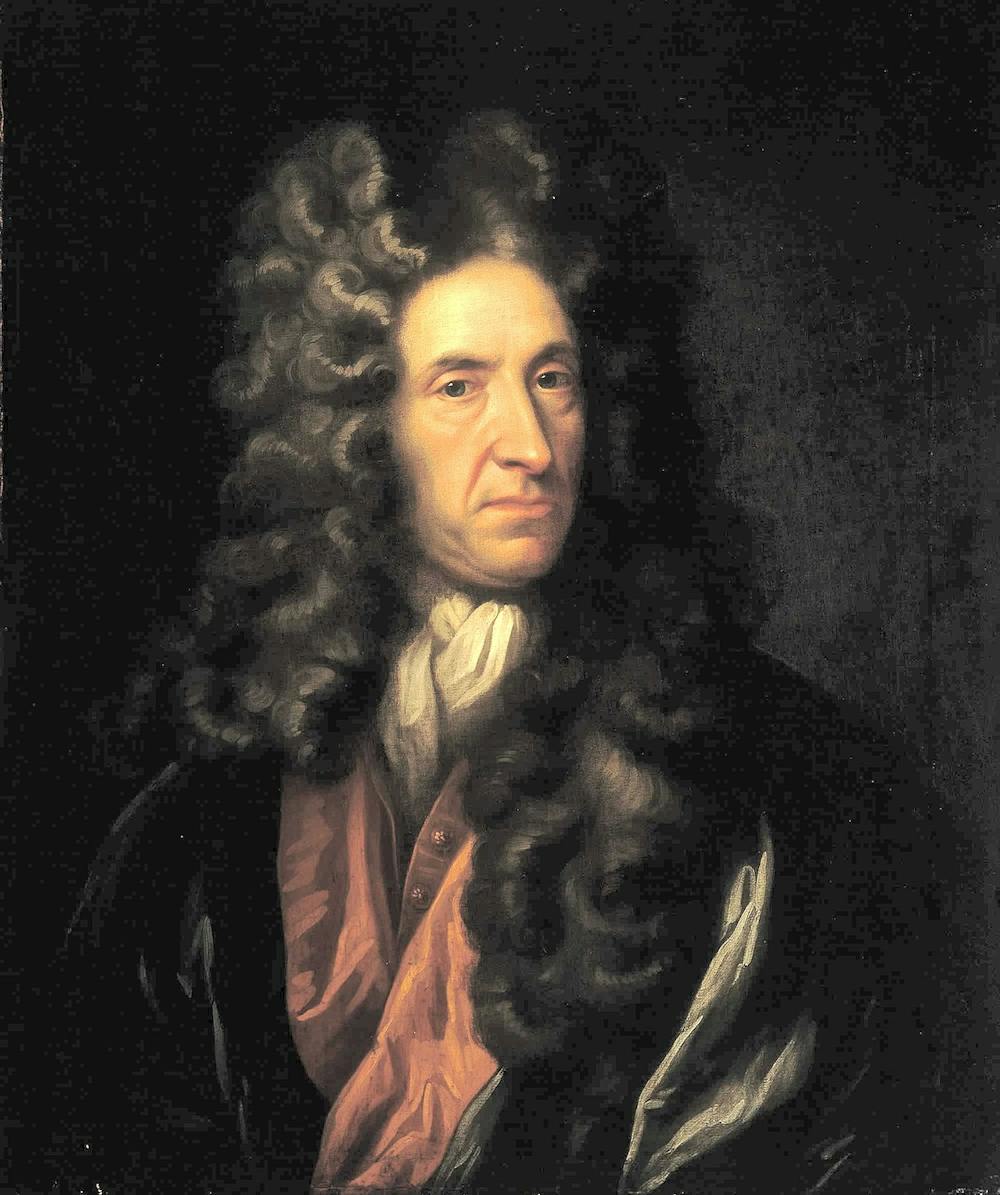
In 1727, author Daniel Defoe claimed it ranked second only to Newcastle for the “shipping off of coals”, and in the decades that followed Whitehaven became an increasingly populous and diverse place.
There were several Jewish tradesmen in the town by the later 1700s and at least 89 people of African heritage were recorded in Whitehaven’s parish registers between 1701 and 1809.
Those peoples’ stories affirm that Whitehaven’s growth was driven by more than just coal mining. The town was also actively involved in the transatlantic slave trade.
The Lowthers, for their part, owned shares in the Royal African Company and a sugar plantation in Barbados.
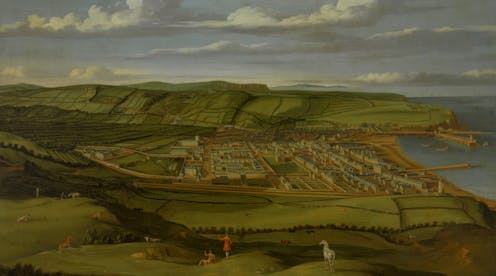
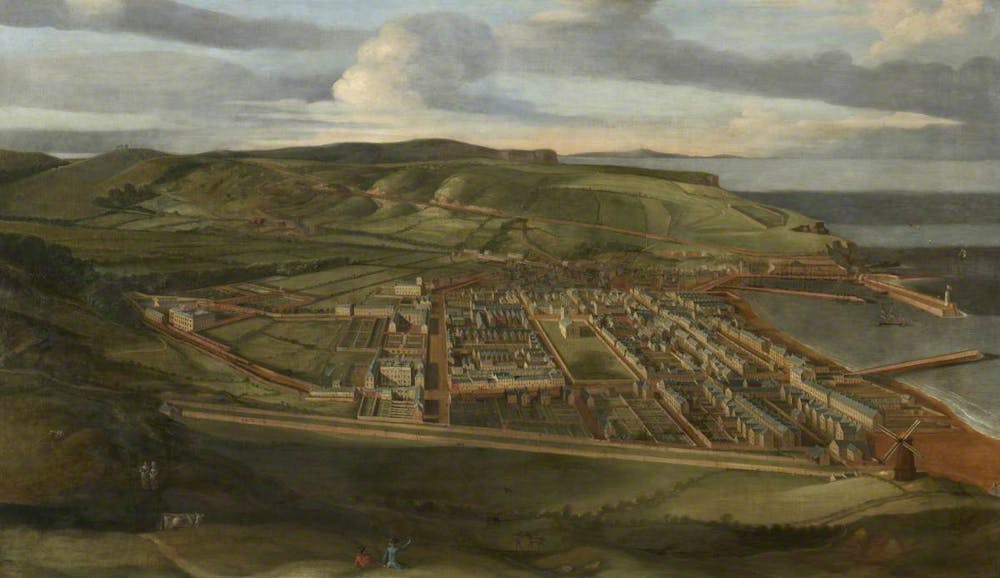
Still, coal mining was the keystone of Whitehaven’s economy and the prosperity the mines brought to the town is reflected in a range of 18th-century artworks. The landscape paintings the Lowther family commissioned from artist Matthias Read are the most vivid examples.
The art of the coal mine
Matthias Read’s Prospect View of Whitehaven (1730-1735) is a bold, idealised composition. It portrays Whitehaven as a place of progress, confidence and aspiration. In this respect, his paintings find a counterpart in John Dalton’s poem.
A Descriptive Poem: Addressed To Two Ladies, At Their Return From Viewing The Mines Near Whitehaven was written in the mid-1750s. Dalton was a local, in a manner of speaking. He’d been raised in Whitehaven but left home to pursue a career as a poet and a churchman. He kept close ties to the Lowthers (who were his patrons) and his Descriptive Poem reflects those links.
The two ladies mentioned in the poem’s title were daughters of Robert and Katherine Lowther, whose son James inherited Whitehaven and its mines in 1755.
Robert and Katherine had three daughters – Margaret, Katherine and Barbara. We don’t know which two Dalton had in mind, but his poem makes plain that he had accompanied them on a tour of Whitehaven’s undersea mine, the Saltom Pit, in 1754.
Touring mines and caves was a fashionable pastime during the 1700s. It appealed to thrill seekers and curious minds alike, and the people who wrote about it often drew comparisons with the journeys to the underworld described in epic poems. Dalton’s poem does just that. It draws heavily on passages from Virgil’s Aeneid as well as Milton’s Paradise Lost.
What’s most interesting about the poem, though, is that it pays less attention to coal itself than to the industriousness and enterprising spirit of Whitehaven’s people.
Dalton only uses the word “coal” once in the poem. His descriptive energies are instead dedicated to praising the new inventions the mines had inspired and the prosperity that ingenuity had brought to the town.
This “creative commerce”, Dalton declares, was the true “glory of the mine”.
Cause for reflection
These words, and the idea they convey, are worth remembering at the present hour.
Most of us would probably be reluctant to celebrate carbon capitalism as full-throatedly as Dalton did. Still, the emphasis he placed on “creative commerce” seems salient when we consider the concerns that have been expressed about the Woodhouse Colliery.
We know that there’s no long-term future in fossil fuels. We’d do well to support the kinds of “creative commerce” that can yield the energy solutions we so sorely need.

Christopher Donaldson has previously received research funding from the AHRC and ESRC.
: The Conversation – Articles (UK)
Have you tried: Travelling to South Africa?