
Coronavirus: wastewater can tell us where the next outbreak will be:
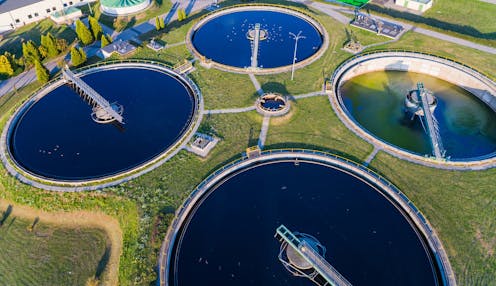
Fairly early in the COVID-19 outbreak, scientists discovered that the virus that causes the disease – SARS-CoV-2 – is shed in faeces. But unlike the virus found in mucus and spit, the bits of virus found in faecal matter are no longer infectious, having lost their protective outer layer. They are merely bits of RNA – the virus’s genetic material. But these bits of RNA are very useful because they allow us to track outbreaks through the wastewater system.
For the past three months, we have been using a test called polymerase chain reaction (PCR) to find traces of SARS-CoV-2 in untreated wastewater. We believe this could form a valuable part of disease surveillance. Most UK towns and cities are served by just one or two wastewater treatment works, so a single sample – about a litre of water – can provide information on millions of people.
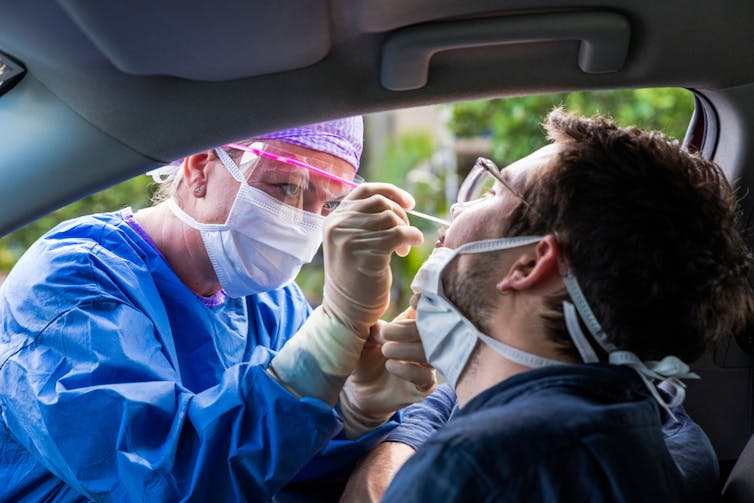
At the moment, the official daily figures on new coronavirus cases come from people hospitalised with an infection and from the government testing programme. But these figures are not good indicators of the actual prevalence of the disease because they don’t include people with mild infections and those without symptoms. (A recent review suggests that about 40-45% of those infected with SARS-CoV-2 are asymptomatic.)
As we emerge from lockdown, it’s important that we have a better early warning system to alert us to the next likely outbreak area. This is where wastewater sampling comes into play. It can tell us with quite a high degree of sensitivity where in the country the disease is still active (it can tell you if one person in 10,000 has the disease). Importantly, it can tell us a week in advance that an outbreak is likely to occur in a particular community.
The virus appears in faeces within three days of infection, which is much sooner than the time taken for people to develop symptoms severe enough for them to be hospitalised. It can take up to two weeks from the time someone is infected to the time they receive a diagnosis.
The time from sample collection to getting the results is around 48 hours so we can get an idea if the number of infections is increasing in the community.
The rapid turnaround time for these tests could give policymakers a head start so they can initiate a lockdown at the earliest stage to control its spread. It can also tell us when the disease is disappearing so that lockdown measures can be eased.
A sample of wastewater can’t tell us the exact number of people with COVID-19, but it gives us a clear picture of whether incidence of the disease is going up or down. And as we’ve been doing this for several months now, we have a solid baseline to work from.
Rolling it out nationwide
Testing wastewater for diseases is not new. Indeed, it has been used to find outbreaks of polio for decades. Our team also uses wastewater to check for norovirus and hepatitis – our team has been doing this for the past six years – but this is the first time we have tracked a coronavirus.
For the past three months we have been working with Welsh Water and United Utilities to take samples of water entering the water treatment works and measuring the levels of viral RNA fragments.
We are focusing on urban areas with testing taking place in Manchester, Liverpool, Cardiff, Bangor, Wrexham and Birkenhead – where the first cases of the disease were discovered in the UK.
We now hope to extend the project and to work with other water companies to expand the surveillance network to other regions of the UK and to feed this information into the Office for National Statistics and the Wales and UK governments to help protect citizens from COVID-19.

Davey Jones receives funding from the Natural Environment Research Council
: The Conversation – Articles (UK)
Have you tried: Visiting Port Elizabeth?