
A nice Paternoster image:
Image from page 67 of “The animal kingdom : arranged after its organization, forming a natural history of animals, and an introduction to comparative anatomy” (1849)
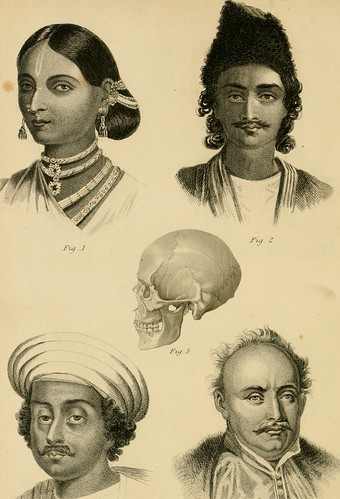
Image by Internet Archive Book Images
Identifier: animalkingdomar00cuvi
Title: The animal kingdom : arranged after its organization, forming a natural history of animals, and an introduction to comparative anatomy
Year: 1849 (1840s)
Authors: Cuvier, Georges, baron, 1769-1832 Metcalf Collection (North Carolina State University) NCRS Blyth, Edward, 1810-1873 Mudie, Robert, 1777-1842 Johnston, George, 1797-1855 Westwood, J. O. (John Obadiah), 1805-1893 Carpenter, William Benjamin, 1813-1885
Subjects: Animals
Publisher: London : Wm. S. Orr and Co., Amen Corner, Paternoster Row
Contributing Library: NCSU Libraries
Digitizing Sponsor: NCSU Libraries
View Book Page: Book Viewer
About This Book: Catalog Entry
View All Images: All Images From Book
Click here to view book online to see this illustration in context in a browseable online version of this book.
Text Appearing Before Image:
ywould the privation misgovernment, which ordinarily suffice to repel the efforts of ad-opcrate to prevent that progressive advancement which, under exist* vanccmcnt, even of the most iutelligcut races,ing circumstances, is achieved by the human race only. 1 It would accordingly, then, appear, that the characteristic traits 15ut, even grant to Man the use of all his organs, yet deprive him of of human intellect are maiuly due to the co-operation of extrinsicthe nccnmulated experience of his predecessors, and all mental culture causes, and to the accessory aids afforded by physical conforiuation.beyond the result of his incidental experience (which in brutes is a I -En. numerous structural concurre ces, all of which ar e required necessary consequence of their i mp*-rfecl m erins of com tc the intellectual developem nt of mankind, are worthy of and wc perceive how imnieii.sit .a ill IcLited also Dnsidcratiou with refcrcace tc the unaided facult es nf other cessones. (SASI&M ]S,AS:5
Text Appearing After Image:
f i- r^ Piq 3 r^ 4 Cniiirr0 ^lnimnl liugiinin. 5B{niann. HUMAN RACE—CAUCASIAN. Fig. 2.—Circassian Branch. Portrait of a Cii-cassian in the Suiteof the Persian Ambassador in 1823, drawn by M. A. Collin. Fig. 4.—Sclavoman Branch. Portrait of the Polish CountLucas de Buin Opalinski. Fig. 1.—Indi.an Branch. An Indian Woman of Pondichcry,after a portrait by M. Geringer m LIndc Franfais. Fig. 3.—Indo-Germangue Branch. A Hindoo of Bramin Caste,Ram Moham Roy, after a portrait painted at Calcutta by M. Belnos. Fig. 5.—iSkull of the Circassian. BlMANAl OR MAN. 49 only been carried to a high degree since the invention of agriculture and tlie iHvision of thesoil into hereditary ])Ossessions. By means of agriculture, the maniuil labour of a portionof society is adequate to the maintenance of the whole, and allows the rcuiaindcr timefor less necessary occupations, at the same time that the hojie of acquiring, by industry, acomfortable subsistence for self and posterity, has given a new
Note About Images
Please note that these images are extracted from scanned page images that may have been digitally enhanced for readability – coloration and appearance of these illustrations may not perfectly resemble the original work.
Image automatically curated and published by www.free-mail.co.za – CLICK HERE to learn more about WP Robot for WordPress.
Have you tried: Diving with Sharks?