
Check out this Paternoster image:
Image from page 619 of “The animal kingdom : arranged after its organization, forming a natural history of animals, and an introduction to comparative anatomy” (1849)
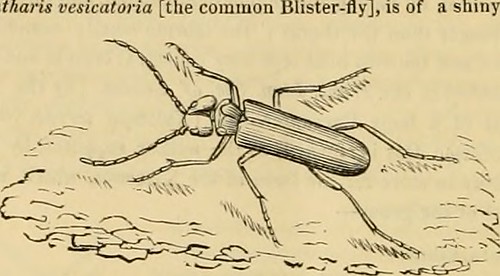
Image by Internet Archive Book Images
Identifier: animalkingdomar00cuvi
Title: The animal kingdom : arranged after its organization, forming a natural history of animals, and an introduction to comparative anatomy
Year: 1849 (1840s)
Authors: Cuvier, Georges, baron, 1769-1832 Metcalf Collection (North Carolina State University) NCRS Blyth, Edward, 1810-1873 Mudie, Robert, 1777-1842 Johnston, George, 1797-1855 Westwood, J. O. (John Obadiah), 1805-1893 Carpenter, William Benjamin, 1813-1885
Subjects: Animals
Publisher: London : Wm. S. Orr and Co., Amen Corner, Paternoster Row
Contributing Library: NCSU Libraries
Digitizing Sponsor: NCSU Libraries
View Book Page: Book Viewer
About This Book: Catalog Entry
View All Images: All Images From Book
Click here to view book online to see this illustration in context in a browseable online version of this book.
Text Appearing Before Image:
thought this larva «as an ap-terous insect or parasite, to which he gave the name of Pediculus melii(<£, and at first I adopted this opinion. Dufouralso formed it into a distinct genus, Tiiungultnus. But the recent researches of Lepeletier and Ser\ille, who havereared these TriunguUni from the eggs of isolated females of Meloe, do not permit us to doubt that they are theyoung of the Meloe. We know, indeed, that many Heteromera deposit their eggs in the nests of various Bees-may it not be the same with these Meloes, the larvae of which attach themselves to the Bees until they have com-pleted their provisioned nests, in which they then take up their abode ?The remaining subgenera have ordinary-sized wings and elytra. Tetraoiiyr, Latr., has short maxillae, and the penultimate tarsal joint is bilobed. [Exotic insects, chiefly Brazil.]Cantharis, Geoff. (Li/Ua, Fabr.), has short maxillae, entire tarsal joints, and the head is larger than the thorax. Canih: Blister-fly], is of a shiny ;
Text Appearing After Image:
2en colour, with black antennae. M. V. Audouinhas studied its anatomy with great care. [Ann.Sci. Nat. vol. ix.) This insect appears in our cli-mate [France] towards the summer solstice, andis found most abundantly on the ash and lilac, ofwhich it consumes the leaves; it emits a mostpenetrating odour. Its larva lives in the earth,and feeds upon the roots of vegetables. [It haslately been found in immense numbers in Eng-land, but very locally.] In the United States ofAmerica, another species, C. vittata^ is enjployedfor the same purpose. It is found in abundance Fig. 77 —Cantli^iris vcsicnturitt. UpOn the pOtatO. ZonitiSy Fabr., has the anteunje slenderer than in Cantharis ; the maxillary palpi are filiform, and the maxillaeshort. In the t^vo following subgenera the maxillae are terminated by a very long silky filament. Netnognatha, Latr., having filiform antennae, and the thorax nearly square. Gnathium, Kirby, with the antennae rather thickened at the tip, and the thorax narrowed in
Note About Images
Please note that these images are extracted from scanned page images that may have been digitally enhanced for readability – coloration and appearance of these illustrations may not perfectly resemble the original work.
Image automatically curated and published by www.free-mail.co.za – CLICK HERE to learn more about WP Robot for WordPress.
Have you tried: Farking?