
Check out this Paternoster image:
Image from page 321 of “The animal kingdom : arranged after its organization, forming a natural history of animals, and an introduction to comparative anatomy” (1849)
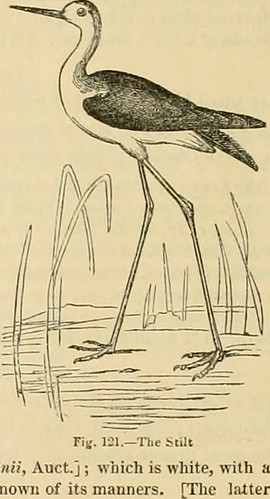
Image by Internet Archive Book Images
Identifier: animalkingdomar00cuvi
Title: The animal kingdom : arranged after its organization, forming a natural history of animals, and an introduction to comparative anatomy
Year: 1849 (1840s)
Authors: Cuvier, Georges, baron, 1769-1832 Metcalf Collection (North Carolina State University) NCRS Blyth, Edward, 1810-1873 Mudie, Robert, 1777-1842 Johnston, George, 1797-1855 Westwood, J. O. (John Obadiah), 1805-1893 Carpenter, William Benjamin, 1813-1885
Subjects: Animals
Publisher: London : Wm. S. Orr and Co., Amen Corner, Paternoster Row
Contributing Library: NCSU Libraries
Digitizing Sponsor: NCSU Libraries
View Book Page: Book Viewer
About This Book: Catalog Entry
View All Images: All Images From Book
Click here to view book online to see this illustration in context in a browseable online version of this book.
Text Appearing Before Image:
rd, greyabove, white below, tinted with rufous on tbe scapularies, and having a broadred gorget round its white throat. Add the Phalaropus frenattrs, Vieillot;or Holopodhis [WHsonii] of M. C. Bonaparte, [which is found in Americagenerally. The first-named species breeds in the northern isles of Scotland,inhabiting marshy grounds, where it cannot be obtained without much diffi-culty, though far from being timid in its disposition]. The Stilts (Himantopus, Brisson)—Have a round beak, slender and pointed, even more so than in theGambets ; the g-rooves of the nostrils extending only half-way. Butwhat particularly distinguishes them, and has given origin to their :name, is the inordinate length and slenderness of their legs, whichare reticulated and destitute of hind-toe, and the bones of which areso feeble as to render walking painful to them. But one species is known in Europe {Charadrius himantopus, Lin.; [H. PH.black calotte and mantle, and long red legs. It is rather rare, and Httle
Text Appearing After Image:
OnALL.E. LM7 bear a neai resemblance to those of the Avocets, witli whicli this genus is even linked by an intermed ate siHcics,which conjoins the webbed toes of the latter with the beak of the Stilts (the U. palmatiu, GjuUI, a native ofAustralia). There are three or four normal species, and both this and the next genus are almost Renerally dif-f\ised, frequenting muddy estuaries in winter, and salt-marshes during the season of propagation]. We can scarcely place otherwise than here The Avocets {Securvirostra, Lin.),—Although their feet, which are webbed nearly to the ends of their toes, almost entitle them to rankamong the Swimming-birds; but their lengthened tarsi and half-naked tibi.T, their long, slender,pointed, smooth, and elastic bill, and the mode of life wliicli results from their conformation, concurto approximate them to the Snipes. What particularly characterizes lliem, and distinguishes themeven from all other birds [if two remarkable species of Humming-bird be excepted
Note About Images
Please note that these images are extracted from scanned page images that may have been digitally enhanced for readability – coloration and appearance of these illustrations may not perfectly resemble the original work.
Image automatically curated and published by www.free-mail.co.za – CLICK HERE to learn more about WP Robot for WordPress.
Have you tried: Diving with Sharks?