
Check out this Paternoster image:
Image from page 206 of “The animal kingdom : arranged after its organization, forming a natural history of animals, and an introduction to comparative anatomy” (1849)
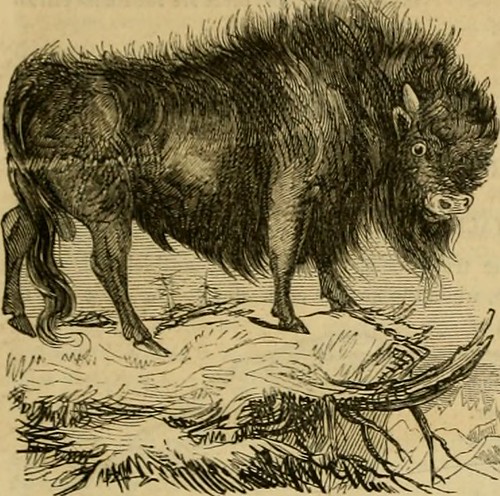
Image by Internet Archive Book Images
Identifier: animalkingdomar00cuvi
Title: The animal kingdom : arranged after its organization, forming a natural history of animals, and an introduction to comparative anatomy
Year: 1849 (1840s)
Authors: Cuvier, Georges, baron, 1769-1832 Metcalf Collection (North Carolina State University) NCRS Blyth, Edward, 1810-1873 Mudie, Robert, 1777-1842 Johnston, George, 1797-1855 Westwood, J. O. (John Obadiah), 1805-1893 Carpenter, William Benjamin, 1813-1885
Subjects: Animals
Publisher: London : Wm. S. Orr and Co., Amen Corner, Paternoster Row
Contributing Library: NCSU Libraries
Digitizing Sponsor: NCSU Libraries
View Book Page: Book Viewer
About This Book: Catalog Entry
View All Images: All Images From Book
Click here to view book online to see this illustration in context in a browseable online version of this book.
Text Appearing Before Image:
a race of them in India, the horns of which include a space of ten feet from tip to tip; it isnamed Arni in Hindostan, and is the Bos ami of Sbaw. [There would appear to be several different wild races,and many tame ones, varying much in size.] The Gj/a//, or Jungle Ox (B. fronialis, Lambert),—resembles the Domestic Ox in most of its characters, buthas horns flattened from before backwards, and no angular ridges. They are directed laterally and more or lessupward, but not backwanl. It is a domestic race in the mountain districts of the north-east of India, andis perhaps derived from the intermixture of the Buffalo with the common species. [\Ve suspect it rather to beallied to the original stock, if it be not really the latter, of the various humped breeds of India.] The IaA, or Grunting Ox, {B. grunniens^ Pal.)—A small species, with the tail completely covered with longhairs Uke that of a Horse, and a long mane on the back : its head api)ears to resemble that of a Buffalo, but the
Text Appearing After Image:
—EurojJCRu bis 144 MAMMALIA. lionis have not been sufficiently described. This animal, mentioned by iElian, was originally from themountains of Thibet. Its tail constitutes the standard, still used by the Turks to distinguish their superior officers. The Cape Buffalo {Bos caffer^ Sparm.).—Verylar^e horns, directed outward and downward andthen turned upward, flattened, and so large atbase that they nearly cover the forehead, leavingonly a triangular space, the point of which isabove. It is a very large and extremely ferociousanimal, which inhabits the woods of Caffraria.[There are other African Bulfaloes of inferior size,a female of one of which (7J. hrachycerost Gray),or the Short-horned Buffalo, with very largeears and well-proportioned limbs, is now living inLondon.] Lastly, The Musk Ox {Bos mosckatus, Gm. lOvibos mos-chatus, Blaiuv.]).—Horns approximated and di-rected as in the Cape Buffalo, but meeting on theforehead by a straight line: those of the femalesmaller and separat
Note About Images
Please note that these images are extracted from scanned page images that may have been digitally enhanced for readability – coloration and appearance of these illustrations may not perfectly resemble the original work.
Image automatically curated and published by www.free-mail.co.za – CLICK HERE to learn more about WP Robot for WordPress.
Have you tried: Visiting Port Elizabeth?