
Community health workers can help South African women with perinatal depression:
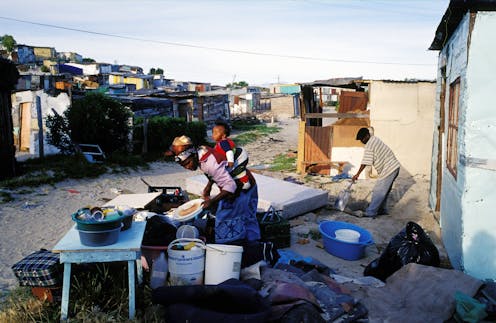
Depression is defined by symptoms such as persistent sadness, low mood, sleep disturbances, low energy, and feelings of hopelessness. The condition is universal and can affect anyone. But certain people are more vulnerable or at risk of experiencing depression. Poverty and trauma are among the risk factors.
Pregnant women and mothers of infants are also at a higher risk of experiencing depression. This is because of the increased pressures they face economically, in their relationships, with their families and socially. And maternal depression has negative impacts on infant growth and nutrition.
Research done in Khayelitsha, a low-income township on the outskirts of Cape Town in South Africa, found that around 19% of pregnant women experienced depression and 16%-35% experienced postnatal depression. This is strongly contrasted with high-income country estimates where 9% of women experience antenatal and 10% experience postnatal depression.
The services that should be available to help these women are very scarce in South Africa. The country’s mental health sector has been severely neglected and under-resourced. It receives only 5% of the total national health budget.
One way that’s been proposed to help boost mental health services is “task sharing”. This is defined as transferring specific tasks to community health workers with shorter training and fewer qualifications than specialists.
It has shown some promising results so far. But to be effective, it needs to consider how a person describes and understands the causes of depression, what elements of therapy are helpful, and how external factors influence the efficacy of counselling and therapy.
For part of my PhD, I examined these considerations in two sub-studies of depressed pregnant women in Khayelitsha.
‘Thinking too much’
In the first sub-study, a sample of 34 participants were asked how they would describe depression. They responded with phrases and idioms such as “being stressed”, “thinking too much”, “feeling sad”, and “being afraid”.
The women also identified what they said were reasons for their depression. These were all related to contextual issues, such as a lack of support from partners and family, having an unwanted pregnancy, the death of a loved one, facing poverty and unemployment, thinking too much (a description and a cause), and anxiety around coping with a new baby.
The women’s own descriptions of how they felt and why were an important first step in developing a way to help them. A psychosocial counselling intervention needs to acknowledge womens’ context and address some of the above issues in collaboration with them. The information that the participants provided was used to help to develop a six-session counselling intervention for a randomised controlled trial testing task-sharing for pregnant women in Khayelitsha, with community health workers providing the counselling.
The second sub-study was conducted after the randomised controlled trial was completed. It examined transcripts of counselling sessions from 39 participants in the trial. Each had received six sessions of psychosocial counselling from a community health worker.
Common elements of therapy
The study investigated elements of the counselling sessions that women said had helped improve their symptoms of depression. Participants said they valued their counsellors giving them information on pregnancy, birth and depression (known as psychoeducation).
The women appreciated it when counsellors told them it was normal to feel depression. Counsellors who expressed empathy and showed commitment to the therapeutic process were also appreciated. The women valued the experience of confidentiality and being able to share their problems with someone they trusted. They felt a sense of relief after opening up to someone, and were able to start communicating better. This led to a feeling of connection and hope.
Participants also appreciated the advice that counsellors gave them about their relationships with their partners and their family members. Although this is not normally used as a therapeutic technique in counselling, it appeared to help women in this context.
Many of these factors have been identified in other studies of the counselling components and techniques that are effective in low- and middle-income countries. The study therefore validates the use of these “common elements” of therapy across a wide variety of counselling interventions.
Social determinants of mental health
The study also revealed social and economic factors that women in Khayelitsha face in their everyday lives that may have influenced how helpful counselling was for them. These included food insecurity, intimate partner violence, economic abuse and alcohol abuse by partners, lack of support from partners, HIV/AIDS, and continuously occurring traumatic events.
Although women said counselling from community health workers was helpful in many ways, these social and economic factors had a negative impact on the short- and long-term effectiveness of the counselling for them.
The study thus recommends that psychological interventions should include elements that try to address some of the social determinants of mental health. Strategies to deal with intimate partner abuse and to build economic skills would be examples.
The findings also support the provision of a basic income grant for all unemployed people. This would assist in reducing anxiety for women around obtaining food and other things they need for physical and mental wellbeing.
Looking ahead
In summary, this study highlighted the importance of addressing depression and anxiety for pregnant women and mothers of young children, using locally relevant descriptions of depression and addressing the causes identified.
Employing community health workers to provide counselling helps women to some extent and reduces the burden on specialists in the public mental health sector. But sufficient training and consistent supervision is essential to equip these health workers with appropriate counselling skills.
Interventions to assist depressed pregnant women also need to use techniques and strategies that consider the very real influences of poverty and related trauma on both depression and on counselling effectiveness.

The research reported in this publication was funded by the National Institute of Mental Health of the National Institutes of Health under award number 5U19MH095699.
: The Conversation – Articles (AFRICA)
Have you tried: Travelling to South Africa?