
Chimpanzees eat plants that point to new ways of treating diseases:
As cancer and other non-infectious diseases continue to rise all over the world it’s become harder for scientists to find safe, effective treatments. In addition, bacteria are becoming more and more resistant to drugs and synthetic medicines have become harsher.
These challenges have led to searches for new solutions, including natural substances, like medicinal plants. Plant based medicines are known to have more benefits because they are less poisonous than synthetic versions. They also have compounds that compliment each other that help in disease prevention.
People have been using plants to make medicines for thousands of years. The World Health Organisation estimates that between 75% and 80% of the world’s population uses at least some plant based medicines.
Africa has its own store of medicinal plants, such as those used in Côte d’Ivoire, Kenya, Mauritius, South Africa and Zimbabwe.
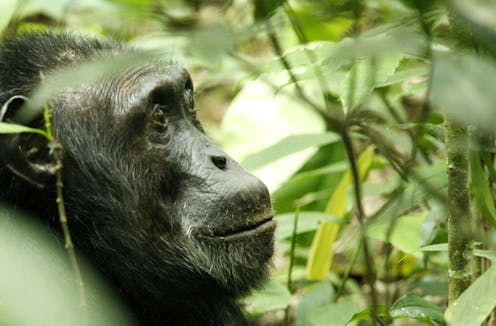
I have been working with a group of scientists to find new ways to exploit plants for medicinal purposes. As part of the process we studied the eating habits and behaviour of some wild chimpanzees based at the Taï National Park in the south western region of Côte d’Ivoire. We identified what they ate, which included leaves, fruit and the stems of the plants. We then tested these in a laboratory.
Our idea followed on from a previous study on the park’s chimpanzees which focused on the energy and protein balance in their diets. Our study focused on the medicinal properties of what they ate.
Our results suggest that the diets of chimpanzees are made up of plants that are a rich source of compounds that improve their immune systems and protect them from certain diseases. Our findings have opened the door to exploring the properties of these plants to test their ability to treat disease in humans.
Tolerance to disease
Chimpanzees are the closest animal to humans genetically, sharing 98% of the human DNA. This genetic closeness means that these great apes share certain diseases with humans. These include yeast infections (candidiasis), Ebola and HIV/AIDS. Chimpanzees are also able to get cancer.
Our hypothesis was that some plants in the chimpanzees’ diet might be keeping them healthy and that this could be useful in developing medicine for humans too.
We tested about 132 extracts from 27 plants chosen based on:
-
how frequently they consumed the plants
-
the time of consumption
-
the quantity eaten
The plants were analysed for their ability to prevent the development of cancer and to inhibit cell damage, bacterial and fungal growth. Their nutritional benefits were also analysed.
The preventive diet
Some of the plants we analysed are already used by people as medicinal plants. But the parts extracted to make medicines are different to those eaten by the chimps. The plant Nauclea diderrichii is a good example. The fruits and leaves are eaten by chimps but the stem bark is used by people to treat fever and jaundice.
Promising plants such as Tristemma coronatum, whose leaf extract is known to induce sleep in humans, and Beilschmiedia mannii, which is already used to treat lung diseases, were identified.
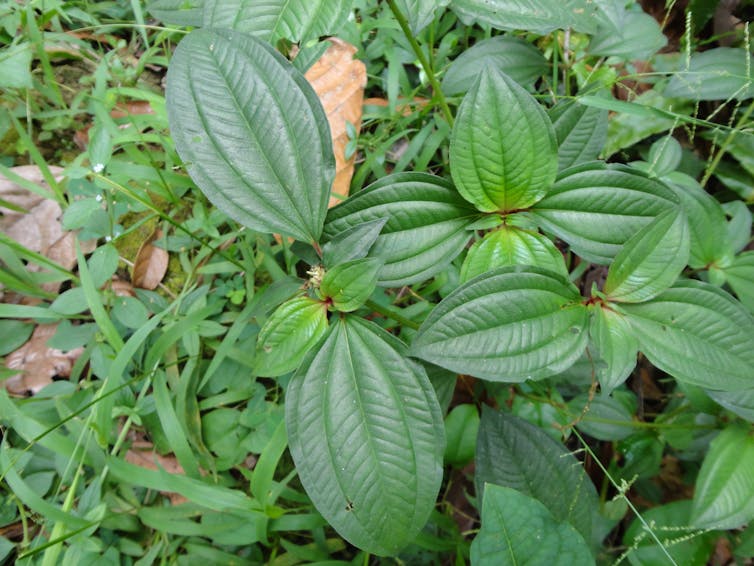
Other beneficial medicinal plants in their Latin and common names in Côte d’Ivoire dialects respectively include;
-
Klainedoxa gabonensis (kroma)
-
Nauclea diderrichii (badi)
-
Manniophyton fulvum (kolomodia, frafrabié, topué, dobuï ,zohé, zoobo)
-
Beilschmiedia mannii (biliè, tienabi, atiokwo, iréklé, biétou, btei, bhoukéssou)
All are abundant in the Taï National Park.
Our results showed that the tested plants induce an enzyme – quinone reductase – that prevents damage to the body cells. These plants inhibit NF-kB enzyme , which is responsible for causing more than 20% of all reported cases of cancer.
The tested plants showed that 24 extracts (18%) had activity to kill bacteria and six extracts (5%) destroyed yeasts that cause yeast infections. Tristemma coronatum killed both bacteria and yeast whereas Beilschmiedia mannii was active on bacteria, fungi and cancer. This means that the extracts of these plants have potential for medicinal use in humans.

Developing new medicines
Our study highlighted the high therapeutic and nutritional potential of certain plants which can be considered in developing new medicines.
The next step will be to test these plants on laboratory animals to confirm their benefits. Once the safety and effectiveness is established, we could then start to test them on humans. If these pass the necessary standards, the development of drugs can follow.

Ahoua Constant works for/consults to/owns shares in Centre Suisse de Recherches Scientifiques en Côte d'Ivoire. He receives funding from Swiss Government. He is affiliated with Centre Suisse de Recherches Scientifiques en Côte d'Ivoire.
: The Conversation – Articles (AFRICA)
Have you tried: Sailing in Africa ?