
Charity shops: why they beat the rest of the high street as a retail experience:
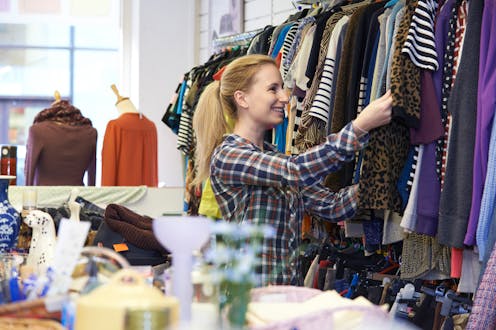
A bone china teapot, a pair of leather brogues, a poetry book, a velvet coat, an embroidered tablecloth and a saucepan. These are just a few of the things I have recently bought from charity shops – where someone else’s trash became my treasure.
I have also donated a big bag full of unwanted toys and games. Hopefully, my cast-offs are destined to become the precious discoveries of others too, stumbled across in a serendipitous browsing session.
This circular relationship is just one of the many joys of charity shops. They extend the usefulness of objects, which instead of ending up in landfill, are appreciated by new owners. Second-hand donations make up 90% of an average charity shop’s product range, comprising mostly clothing, but also furniture, homeware, books and much more.
Yet with growing awareness of the benefits of a circular economy, a certain discernment has developed among charity shoppers which has influenced the relevant language in recent years. Instead of “second-hand clothes”, we now speak of “antique artefacts”, and “pre-loved” or “vintage” finds. What was once considered scruffy is now “shabby-chic”.
So charity shops are no longer the preserve of those seeking cheaper goods out of necessity, but the highly revered stamping ground of savvy shoppers. These knowing consumers are not just in search of everyday useful items, but seek creative and artistic trophies, swooping like jackdaws onto rich assortments of paraphernalia in these contemporary Aladdin’s caves.
The economic value of charity shops is considerable too. There are currently over 11,000 of them in the UK, raising approximately £270 million a year for all kinds of important work. This means vital funding for medical research, tackling poverty, improving child welfare, and a multitude of other causes.
Charity shops also epitomise a business concept known as the “triple bottom line”, which argues that companies should have three key imperatives: people, planet and profit. For while these stores make money for their charities, they also have social and environmental benefits.
As a social good (apart from supporting charitable work), they provide employment in the UK to 25,000 people, and volunteering opportunities to another 233,000. These volunteers often benefit psychologically from their roles, with many overcoming loneliness while developing confidence and self-esteem.
From an environmental perspective, charity shops keep goods in circulation which might otherwise be thrown away, saving local councils in the UK at least £31 million a year as they divert 339,000 tonnes of clothing textiles from being thrown into landfill, and reducing CO? emissions by millions of tonnes.
So while retailers in the “first-hand” sector grapple with the dilemma of how to be more sustainable while depending on continuous consumption, charity shops are at the forefront of sustainable retail. They deliver slow fashion to thoughtful consumers, and provide new purposes for donated goods.
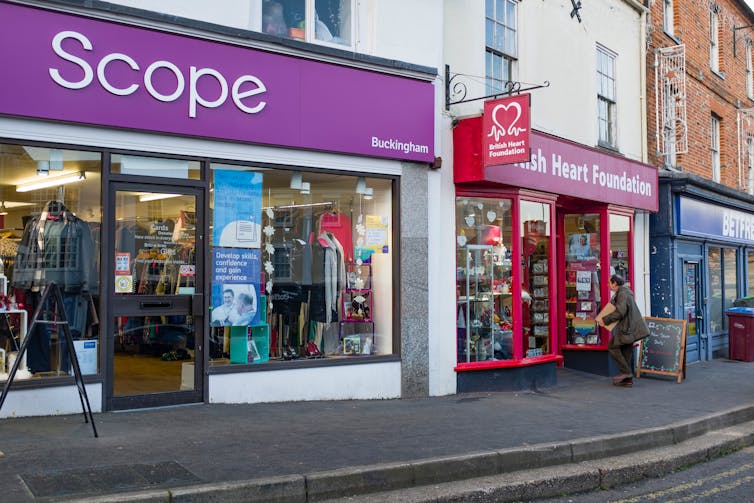
Of course, the chance of bagging a bargain is a major draw for many shoppers too. Charity shops provide a rich array of affordable goods, and allow even those on modest incomes to upgrade to designer brands. Yes, you really can find a Burberry trench coat for £30 – you just need patience and a willingness to practise your treasure-hunting skills.
Recycled retail therapy
Charity shops are uniquely experiential. They are special retail spaces which satisfy a desire for individuality and authenticity, providing a thrilling shopping experience which engages all the senses.
One study even highlights the pleasure that people gain from spending time in these relaxed and informal environments – as a welcome antidote to the meticulously designed retail spaces of first-hand shopping, offering abandonment and chance instead of curated perfection.
Charity shop environments have certainly evolved. Until fairly recently, research suggests they were often regarded as “dark, smelly” and disorganised places. Today, the majority have undergone a transformation, becoming light, bright and pleasant places to visit.
Their challenge for the future will be to maintain that feeling of discovery, surprise and escapism which sets them apart from mainstream shopping. They will also continue to rely on donations from the public – whether they’re unwanted Christmas gifts or toys that children have grown out of (there was a surge in donations after the first lockdown when many households decided to spend some of their enforced time at home clearing out wardrobes and cupboards).
If the donations continue to flow, the cabinets, shelves and rails of charity shops will be freshly stocked with all manner of wonderful items looking for a new home – and providing the ultimate in guilt-free shopping. It’s hard (for me) to imagine a better pastime than something that combines supporting good causes, saving waste and spending very little.

Esther Pugh does not work for, consult, own shares in or receive funding from any company or organization that would benefit from this article, and has disclosed no relevant affiliations beyond their academic appointment.
: The Conversation – Articles (UK)
Have you tried: Travelling to South Africa?