
Celtic FC leads way in tackling period poverty, now other clubs need to follow:
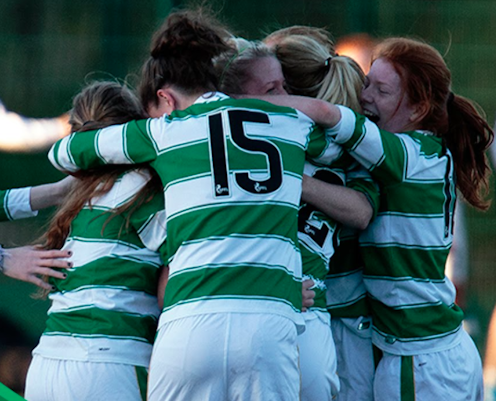
Scotland’s top football club, Celtic FC, will become the first in the UK to provide free menstrual products in its stadium this autumn. The move raises awareness of the global issue of period poverty and should prompt other clubs to follow Celtic’s lead.
Period poverty – being unable to afford menstrual products – is a worldwide problem and has become a major focus of campaigns in numerous countries. It affects one in ten women aged 14 to 21 in Britain and nearly one in five in Scotland.
Many women and girls are prevented from participating in sport both because of period poverty and lack of access to sanitary products – plus the shame and stigma associated with menstruation. A recent study found 48% of girls aged 14-21 feel embarrassed by their periods, while 71% have felt embarrassed buying products. For this reason campaigns like #freeperiod, which pushes for free menstrual products in schools, focus on stigma as well as access.
Celtic got involved after three supporters started a petition requesting that the Glasgow club provide menstrual products in its toilets, which went on to attract 2,700 signatures. It is fitting that Scotland should be leading the way in this regard, since the movement to end period poverty has been particularly active in this country. To quote the Labour MSP Monica Lennon, who has been one of the lead campaigners:
Menstruation should never be a barrier for women participating in football or supporting their team.
Sport and social justice
Sport has long served as a platform for social and political activism. Famous examples include the Black Panther protest at the 1968 Olympics and Nelson Mandela’s use of the 1995 Rugby World Cup to help unify post-apartheid South Africa. More recently, player protests in the National Football League in the US have brought racial injustice into the limelight.
But if sport can help attract global attention to social justice issues such as racism, the broader feminist movement is conspicuously absent in popular sport. One exception has been female athletes breaking into sporting boys’ clubs – like Katherine Switzer gatecrashing the all-male Boston marathon in 1967, for instance; or tennis star Billie Jean King’s famous Battle of the Sexes game against Bobby Riggs in 1973, where King came out on top. Her battle continues today over equal pay in professional tennis.
The global sport-for-development movement includes many initiatives for gender equality and empowerment. Yet many harmful gender norms still leave the playing field uneven, such as a lack of female role models and few opportunities for girls in “masculine” sports.
Menstruation in sport had long been considered the last taboo for girls and women. It has attracted a surprisingly limited amount of research. We do know that menstruation is a barrier for females in sport, and a significant reason why many teenage girls drop out of it altogether. Many worry about leaking, and end up feeling marginalised – sometimes with long-term physical and psychological consequences.
By taking on the issue directly, Celtic are making a bold statement that girls and women are welcome and supported in football. It is part of what looks like a “moment” in sport for menstruation. Chinese swimmer Fu Yuanhui, for example, who is much loved for her expressive interviews, openly discussed struggling to perform during her period at the 2016 Olympics.
The musician/activist Kiran Gandhi brought the concept of free bleeding to the forefront in 2015 when she ran the London marathon on the first day of her period. Last year saw an #ActivePeriod campaign, fronted by GB Olympic hockey champion Samantha Quek, to encourage girls to continue playing sports and doing physical activity during their periods.
More recently, menstrual products giant Always launched its #likeagirl campaign, featuring girls sharing their testimonials of overcoming fear and barriers in sport. Finally, a menstrual health education website for girls in sub-Saharan Africa has been launched by Scottish entrepreneur and health expert Dr Liita Cairney, teaching them how to use yoga to support their physical and emotional health during their menstrual cycles.
Celtic FC is a less obvious advocate for menstrual activism than an Olympic athlete or tampon company, yet professional football is exactly the kind of high-profile sport that has served social justice movements so well in the past.
Other clubs should follow suit, sending a message to girls everywhere that #periodpoverty is no reason to stay on the sidelines. With the FA aiming to double the number of women and girls taking part in football by 2020, it would certainly send out the right message.

The authors do not work for, consult, own shares in or receive funding from any company or organisation that would benefit from this article, and have disclosed no relevant affiliations beyond their academic appointment.
: The Conversation – Articles (UK)
Have you tried: Diving with Sharks?