
Brianna Ghey: how vigils help LGBTQ+ communities grieve:
Have you ever felt so connected to a stranger that their death hurts you as if you did? You will probably find other people who experience this if you attend a vigil. In a way, you did know that stranger. They probably shared some of the pain, fear and trauma that you also carry.
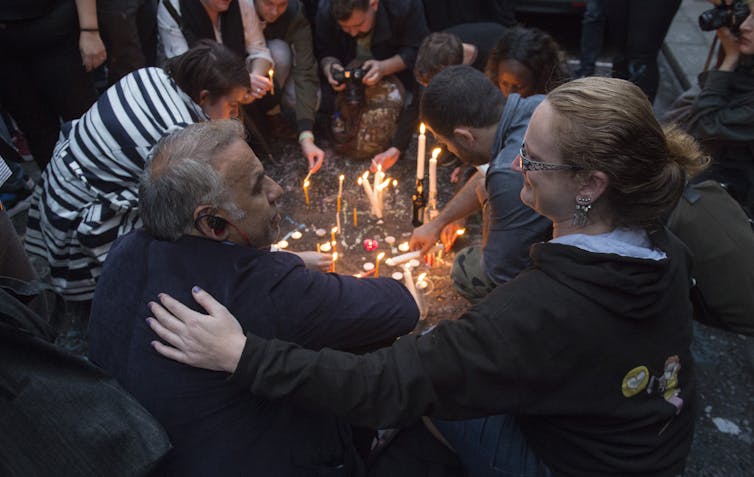
I attended a local vigil for Brianna Ghey, a 16-year-old trans girl who was murdered by two 15-year-old children on February 11 2023. I didn’t know Brianna and yet I grieved for her alongside many others. As a community, we stood in solidarity. We cried, grieved and shared in one another’s collective pain.
Gatherers were invited to speak and bear witness to each other’s grief. A mother spoke painfully of losing her trans daughter who, in her words, felt she did not belong in the world. A young activist lamented that 16-year-olds should be worried about their GCSE results, not being killed by other children.
Another young person, who had followed Brianna on TikTok before she died, shed tears over their feelings of loss and made calls to resist anti-trans hostility and hatred. And so, we lit our candles and began to grieve over these stories of loss and pain.
Stories of violence towards LGBTQ+ people – from the HIV/AIDS epidemic, to police brutality, to mass shootings and everyday hate crimes – plague our collective conscience and memory. Arguably, it is in these times of violence and pain that LGBTQ+ communities are bound together, in the shared violence that is targeted towards us.
Rituals like candlelit vigils have long been a social practice in marking trauma, tragedy and pain. LGBTQ+ communities have observed vigils for decades as a rite of belonging, memorial and social action.
Annual candlelit vigils for those lost to HIV/AIDS serve as a reminder of the historic legacy of LGBTQ+ death. They challenge the stigma and shame surrounding HIV/AIDS by turning outdoor spaces into public sites of mourning.
Memorialising such trauma provides attendees from within the community with a language to protest and mourn the cause of the vigil: anti-queer violence.
How violent crimes affect LGBTQ+ communities
My own research, conducted at the time of the Pulse Nightclub shooting in Orlando, Florida (2016), found that British LGBTQ+ people were indirectly victimised by such a large scale murder.
The shooting took place in the early hours of June 12, 2016. It left 49 people dead and more than 50 wounded. At the time, it was the deadliest mass shooting in US history. Despite not knowing the victims directly, British LGBTQ+ people shared in the pain of those lost and traumatised by the event.
Through social media, vigils were organised across the country, where local people were able to stand in solidarity with their Floridian contemporaries and grieve for those who were killed because of their LGBTQ+ identities.
Many participants who attended the vigils expressed their anger, shock and devastation at such a targeted attack towards Orlando’s LGBTQ+ community, who they had never met but felt kinship with.
In hate crimes such as the Orlando shooting (sometimes also described as “message crimes”), an individual, group, or place is targeted for who they are and what they represent. Hate crimes are designed to send a direct message to everyone else who shares the victim’s identity, that they are also a potential target.
The pain and trauma instilled by the hate event ripple through to neighbouring communities, who are indirectly victimised through their shared identity. Many participants that I interviewed in the aftermath of the Orlando shooting said it served as a reminder that queerphobia was alive and present in day to day life.
Unite to resist hate
Vigils serve three purposes for LGBTQ+ communities. They allow us to express our feelings of love, loss and grief with the direct victim(s). They enable us to come together as a community, whether it be local, national, or global. And they establish a physical place of resistance to anti-queer violence.
There is always a fear that LGBTQ+ rights will be rolled back and taken away, particularly with the rise of anti-trans rhetoric in the political, social and online sphere over the past five years. Almost all attendees I heard from at the vigil for Brianna spoke of her murder as a direct consequence of what they saw as a growing hostility towards trans people and the wider LGBTQ+ community.
Both vigils for Brianna and the Pulse victims provided a space of grief and a rally of resistance, to protest and mobilise against anti-queer hostility and hatred. Vigils for LGBTQ+ people turn public places into a collective space of unity, in a world where we often don’t belong.

James Pickles does not work for, consult, own shares in or receive funding from any company or organisation that would benefit from this article, and has disclosed no relevant affiliations beyond their academic appointment.
: The Conversation – Articles (UK)
Have you tried: Farking?