
Blood pressure medications decrease death and severe disease in COVID-19 patients:

At the start of the pandemic, there was concern that certain drugs for high blood pressure might be linked with worse outcomes for COVID-19 patients.
Because of how the drugs work, it was feared they would make it easier for the coronavirus to get inside the body’s cells. Nevertheless, many national medical societies advised patients to continue taking their medication.
With the potential for a second wave, it was essential to investigate whether patients could safely continue using these drugs. So, our team at the University of East Anglia set out to discover what effect they have on the progress of COVID-19.
Instead of putting patients at risk, we found that these medications actually lower the risk of death and severe disease in COVID-19 patients.
Bad outcomes cut by one-third
We pooled data from 19 relevant COVID-19 studies that included patients taking two particular types of blood pressure medication: angiotensin-converting enzyme inhibitors (ACEIs) and angiotensin receptor blockers (ARBs). This allowed us to look at the outcomes of more than 28,000 COVID-19 patients to assess the effects of these drugs.
ACEIs and ARBs work by acting on the renin-angiotensin-aldosterone system (RAAS), which is essential for regulating blood pressure and the balance of fluids and electrolytes. These drugs were also thought to potentially increase the expression of a protein found on the surface of cells called angiotensin-converting enzyme 2 (ACE2).
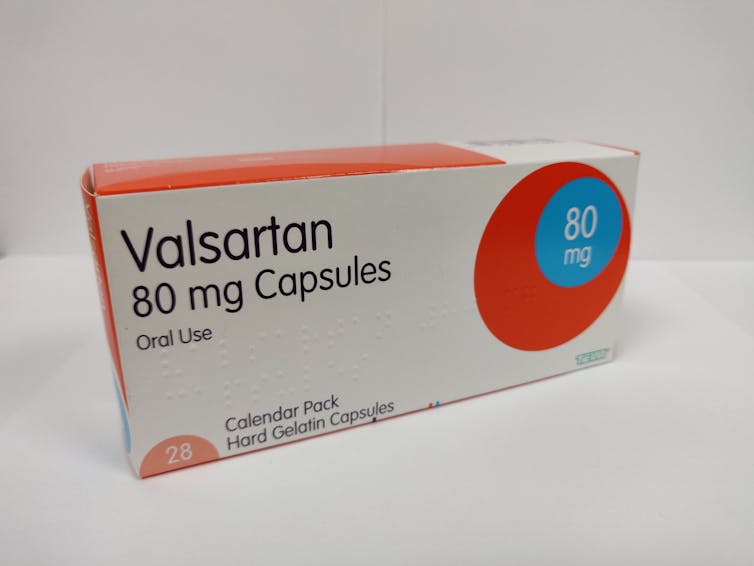
Apart from helping regulate blood pressure, the ACE2 protein is also what allows the coronavirus to enter the body’s cells. This is why there were concerns about patients using these drugs. If the medications increased the amount of ACE2 present on cells, it was suspected they would make it easier for the virus to infect them, worsening a patient’s condition.
But when we looked at the outcomes of patients taking ACEIs and ARBs compared with those not on these medications, this wasn’t the case.
We found no evidence that these medications might increase the severity of COVID-19 or the risk of death. On the contrary, among patients taking ACEIs and ARBs that had been prescribed to treat high blood pressure, there was actually a significantly lower risk of death, being admitted to intensive care or being put on ventilation. We observed a reduction of such events by one-third in this group.
It may be that these medications actually have a protective role – particularly in patients with high blood pressure.
What’s behind this effect?
It’s not clear why patients taking ACEIs and ARBs experienced less severe disease, but there are a couple of points to consider.
The first is that while theoretically these drugs were thought to increase ACE2 levels, there’s no convincing evidence that this actually happens. We don’t have any clinical data on the effects of these drugs on ACE2 expression in human tissue.
And even if these drugs do increase ACE2 levels in cells, not all of it is surface-bound. Additional ACE2 that appears elsewhere in the cell might not function as an entry point for SARS-CoV-2.

There’s also a second potentially relevant piece of information. Infection with SARS-CoV-2 may also lead to an overreaction of the RAAS pathway – which is what these blood pressure drugs target – and inflammation. This increased inflammatory process is thought to be the culprit for acute lung injury and can lead to worsening pneumonia and acute respiratory distress syndrome. Hence, it might be that taking medications that inhibit the RAAS system prevents such a sequence of events and improves clinical outcomes in COVID-19.
What we do know is that our study provides substantial evidence that patients should continue using these medications during the pandemic, as they are safe. We haven’t investigated whether starting these tablets in acutely ill COVID-19 patients will improve their outcomes, but this is now the subject of a randomised controlled trial.

Vassilios Vassiliou has received funding from the Rosetrees Trust, the Norfolk Heart Trust and the UK National Institute for Health Research (NIHR).
Ranu Baral does not work for, consult, own shares in or receive funding from any company or organization that would benefit from this article, and has disclosed no relevant affiliations beyond their academic appointment.
: The Conversation – Articles (UK)
Have you tried: Travelling to South Africa?