
Back pain: why exercise can provide relief – and how to do it safely:
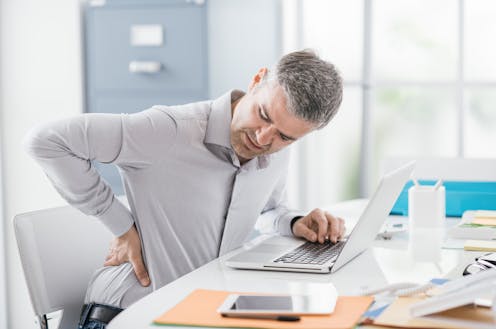
After many months in lockdown, a lot of us are finding that we’re experiencing back pain that we hadn’t been bothered by before. There could be many reasons for this, including increased stress during the pandemic, moving less and spending more time sat in one position.
But while you might think you should rest your back if it hurts, being active can actually help relieve your pain and protect you from getting back pain again in the future. This is because our spines are designed to move, bend and lift, which keeps our bones and soft tissues strong and supple.
Regular movement and exercise can help improve and restore strength, endurance and flexibility, and help us recover more quickly from a bout of acute low back pain. This is why staying physically active is one of the most consistent and widely recommended ways of managing low back pain.
Why physical activity works
Although exercise and physical activity are widely recommended for people in pain, researchers are still examining how and why it works, and what dose is best for pain relief.
The traditional view of how exercise helps relieve pain has focused on how exercise impacts the structures surrounding the spine – for example, by increasing the strength of the muscles in the spine and abdomen. While these ideas are supported in part by research, they don’t explain fully why exercise can relieve back pain.
There’s growing evidence suggesting that exercise leads to beneficial changes to certain functions in the nervous system, including in the brain. Essentially, exercise directly influences how we experience pain by decreasing our sensitivity to potentially damaging stimuli. This phenomenon is known as exercise-induced hypoalgesia.
In research on pain-free adults, a single bout of high-intensity aerobic exercise (such as cycling or running for 15 minutes) is able to trigger these pain relief effects for approximately 30 minutes afterwards.
These pain-relieving effects are underpinned by several interacting mechanisms – most notably the release of the body’s naturally-produced pain relief agents, such as endocannabinoids, adrenaline, noradrenaline, endorphins and serotonin – within the nervous system and via the circulatory system. These chemicals signals not only help to reduce pain directly, but have the added benefit of improving mood. This is an important benefit as the experience of pain is known to be influenced directly by one’s thoughts and feelings and by our perceived control over pain.

Another key mechanism thought to be involved in exercise-induced hypoalgesia involves the formation of new and helpful connections within the nervous system, a process called neuroplasticity. These structural changes in the nervous system operate over slower time scales than the chemical alterations that happen as a result of exercise-induced hypoalgeisa, but are thought to lead to a decrease in pain associated with movement over time.
While the search to establish the exact mechanisms that underpin exercise-induced hypoalgesia continue, the good news is that exercising even despite pain helps to activate these pain-relieving effects.
Get moving
Thankfully, there’s no specific type of exercise or activity needed to alleviate low back pain. The combination of physical activity (the cumulative amount of movement we get daily) and exercise – regardless of the type – can be helpful.
But this doesn’t mean you should just start running or lifting weights expecting it to cure back pain. It’s important to tailor what you do to your current abilities and build up intensity gradually to avoid injury. Most importantly, do things you enjoy and are likely to stick with – this will better help alleviate pain, and hopefully prevent it from coming back.
There are also plenty of simple ways you can move more daily by interspersing short bouts of activity throughout your day – such as walking up and down your stairs a few times every couple of hours. Try to reduce the time spent in one position, or even consider a standing desk.
Back pain is rarely caused by something serious. Typically, it’s the result of simple sprains or strains and will settle within a few weeks. Staying active and exercising are the best things that we can do – and are typically recommended over opting for injections or surgery. Even if your back pain is persistent and lasts a few months or more, increasing physical activity and exercising is one the best ways to manage it.

Michael Thacker consults to Salaso Healthcare Solutions. He receives funding from Medical Research Council (UK)
Joanne Marley and Suzanne McDonough do not work for, consult, own shares in or receive funding from any company or organization that would benefit from this article, and have disclosed no relevant affiliations beyond their academic appointment.
: The Conversation – Articles (UK)
Have you tried: Travelling to South Africa?