
Architecture after COVID: how the pandemic inspired building designers:

Walking during lockdowns, following protocols and restrictions, city dwellers witnessed the birth of a new architectural aesthetic.
Concern with infection began gradually redefining the space of cities and the social choreography of daily urban life. This has led to a radical rethinking of the limits of architecture. I explored these changes in my new book, Architecture After COVID.
It now seems absurd to think about architecture purely in terms of aesthetics or technology. As a greater awareness of hygiene in cities emerged, urban spaces and buildings were reorganised in order to minimise physical surface contact.
Contactless design environments became so pervasive that people must now be encouraged, via signs and announcements, to use handrails to avoid the risk of falling. The public became afraid or sceptical of touching handrails, door handles, elevator buttons or any leaning support.
Architects have had to adapt to these new design priorities and instincts.
COVID-inspired innovation
COVID has led to radical changes as architects have had to drastically rethink the “craft” of designing. Their techniques changed in terms of communication, documentation, technical innovation and unconventional ways of “meeting” clients or “visiting” construction sites.
To understand how this happened and better capture how the shift to online working has effected the craft of architects, I devised a small experiment with 130 practices from 40 different countries.

In the past I have engaged in lengthy observations of architects at work in different firms, following their work and describing their working culture. The impossibility of visiting firms during the pandemic to engage in direct observation of their work prompted me to adapt techniques that could be practiced from a distance.
I asked firms to describe a situation that illustrated how their working routines adapted to COVID restrictions. Paying attention to the work of architects in a period of crisis – how they adjusted working methods and redefined priorities to be able to continue to design – highlighted key skills of the designers.
Be they in Buenos Aires or Amman, Los Angeles or Prague, Manchester or Shenzhen, what brought practitioners together was the attempt to rethink the dynamics of how they work.
How the pandemic has changed architectural work
My study found three important changes in architectural practice. First, many architects returned to drawing and sketching, often enhanced electronically.
As drawing together in the studio became impossible, designers began expressing ideas in oral and written ways. These “returns” prompted design concepts to be clearly articulated beforehand, not in the process of spontaneous exchange around the table.
The pandemic also revived the profile of the perfectionist – the calculative pensive architect, the designer who thinks more than acts, the one who writes before sketching. It also freed designers from rigid hierarchies, unlocked the hidden potential of the youngest team members and turned the makers into writers and the shy into the vocal.
Second, the pandemic changed the “technological landscape” in design firms. Architects began rethinking their working methods, often implementing old technologies, software and storage solutions into their daily work. Some of these technologies and tools had been around since the 1990s but had never been introduced in practice.
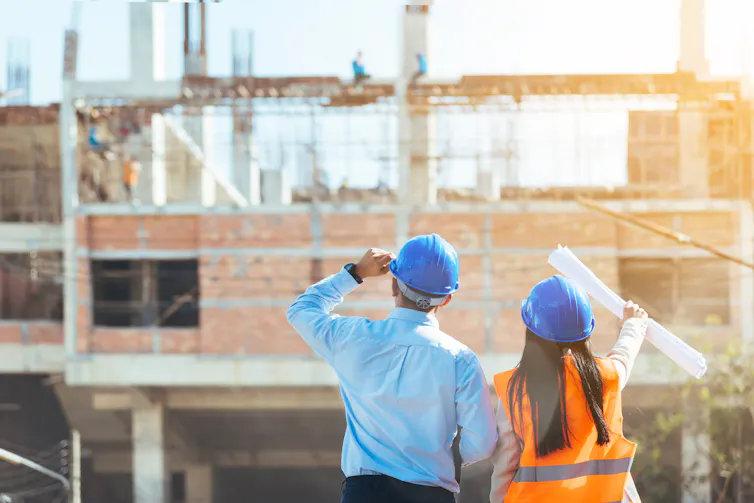
Third, architects crafted new protocols and tactics for connecting and collecting feedback from clients and new ways of meeting and mobilising their communities.
Some practices went as far as training representatives in territories they could not travel to. This helped them to act and speak like an architect and represent them on the ground.
Others conducted design and planning meetings on renovation sites. This resulted in resourceful solutions for crafting new relations with clients, communities and construction sites that enhanced the social skills of architectural professionals and the efficiency of their designs.
My study found no miraculous solutions to the challenges and the disruptions created by the COVID pandemic. Yet in their everyday, repetitive design work, architects generated numerous small innovations and adjustments that provided solutions. When they were repeated and adopted by others, these inventions propagated, often leading to bigger changes.
Architects appeared more than ever, as resourceful agents that make sense of complex situations and devise materially smart solutions.

Albena Yaneva receives funding from ESRC BA EU
: The Conversation – Articles (UK)
Have you tried: Visiting Port Elizabeth?